Part 3
Three days later, the Whitmore mansion no longer felt like a home.
It felt like a courtroom.
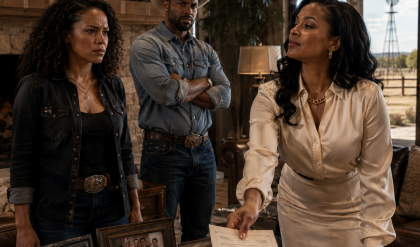
The long dining table had been stripped of flowers and silver trays. In their place sat laptops, legal folders, bank documents, and three people from Northbridge Bank who had the solemn expressions of doctors delivering a diagnosis.
Grace sat to my right. The lead auditor sat across from Margaret. Robert had taken the seat at the far end with the look of a man who finally understood that silence can make you guilty too.
Daniel sat opposite me.
He looked tired in a way money could not fix.
No Vanessa. No practiced smile. No confident posture. Just a man forced to sit inside the wreckage of his choices.
Margaret tried to fight every line item.
“These restrictions are excessive,” she snapped.
The auditor did not even blink. “The withdrawals alone require explanation.”
“They were family needs.”
I looked up from the report. “Family needs do not include marble bathroom renovations billed as operational consulting.”
The room went still.
Margaret’s face turned red. Daniel closed his eyes.
That was how the morning went.
One truth at a time.
The Florida expansion that should never have been approved.
The cousin paid for work he never did.
The “client dinners” that were really vanity expenses.
The delayed vendor payments.
The payroll warning no one wanted to read until it became urgent.
By noon, the whole elegant lie was on the table.
Whitmore Holdings could survive.
But not the way it had been run.
The bank agreed to move forward only under strict conditions: outside oversight, quarterly audits, frozen family withdrawals, and formal documentation of every personal guarantee.
My role, once hidden in the shadows of Daniel’s image, would be recorded in the company’s legal record.
Not whispered.
Not implied.
Recorded.
Daniel signed first.
His hand shook, then steadied.
Robert signed next.
Then the bank.
Finally, the folder was placed in front of me.
Every eye in the room landed on my pen.
I read the acknowledgment one more time, especially the section confirming the personal assets I had exposed to rescue a company that had often treated me like a decorative object.
Then I signed.
Not because I was saving them.
Because I refused to let my work disappear just because they had been too proud to see it.
Margaret turned her face away as if my signature insulted her.
Daniel stared at the paper, then at me.
“Thank you,” he said, quietly.
Two words.
Too late for the marriage.
Not too late to matter.
I nodded once. “You’re welcome.”
Not warm. Not cruel. Just finished.
The meeting broke apart slowly after that. Bankers gathered their notes. Grace stacked her files. Robert stayed frozen for a second too long, then finally looked at me with real shame.
“I should have said something years ago,” he admitted.
“Yes,” I said. “You should have.”
He nodded like a man accepting a debt he couldn’t repay.
Margaret left first, stiff-backed and furious, as if dignity could be restored by speed. Daniel stayed behind.
So did I.
The others drifted out until the room emptied and the afternoon light fell across the table between us.
For a long time, neither of us spoke.
Then Daniel said, “I didn’t understand.”
I looked at him.
That was true.
He hadn’t understood because understanding would have required him to see me as more than support. More than a wife. More than the steady hand behind his name.
He would have had to admit that I had been saving him while he called himself the savior.
“I know,” I said.
He swallowed hard. “I thought you were just… there.”
The honesty of it hurt more than an insult would have.
I let the silence sit between us before I answered.
“I was there,” I said. “That was the problem. You started treating my presence like a guarantee.”
He looked down.
I think that was the moment he truly knew he had lost something he could not buy back.
Not just me.
The life he had assumed would always tolerate his arrogance.
He took a breath. “I’m sorry.”
I believed he meant it.
That didn’t change anything.
“Daniel,” I said gently, “I didn’t leave to punish you.”
He looked up.
“I left because I finally understood that I was the only adult in our marriage.”
His eyes closed for a moment.
When he opened them again, they were wet, but he didn’t cry. Daniel Whitmore was too proud for that, even now.
Maybe that was sad.
Maybe that was why I had stopped waiting.
“I loved you,” he said.
“I know.”
“I still do.”
I held his gaze.
“Love without respect is just a habit that survives too long.”
That one landed.
He looked like I had struck him, but I had only told the truth he had spent years avoiding.
I stood, picked up my folder, and walked toward the door.
“Emily,” he said behind me.
I paused, but I did not turn.
“Is there any chance at all?”
I closed my eyes for one second.
There was a version of me that might have said yes out of loyalty, out of history, out of the old hope that people can become who you need them to be if you stay patient enough.
But that woman had died at Sunday lunch.
“No,” I said. “But there is a chance you’ll become someone your next life won’t have to carry.”
Then I left.
Weeks later, I lived in a quiet apartment overlooking downtown Boston.
No marble halls. No portraits. No mother-in-law waiting to judge my posture.
Just sunlight, white walls, fresh flowers, and mornings that belonged to me.
I opened my own consulting firm under my own name.
Emily Carter.
Not Mrs. Whitmore.
Not Daniel’s wife.
My name.
The first time I signed a new contract, my hand did not shake.
And on the desk beside me sat the wedding ring I had taken off that afternoon in the car, resting in a small ceramic dish like something finished and finally at peace.
I never went back to the mansion.
I didn’t need to.
Daniel had learned his lesson the hardest way possible. Margaret had lost control. Whitmore Holdings survived, but the version of that family built on pride and silence was gone.
As for me, I built something better.
Not loud. Not dramatic.
Just mine.
THE END