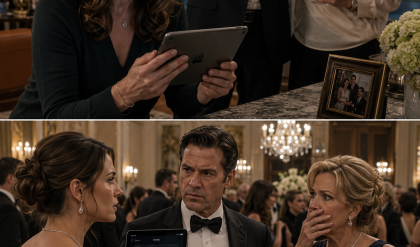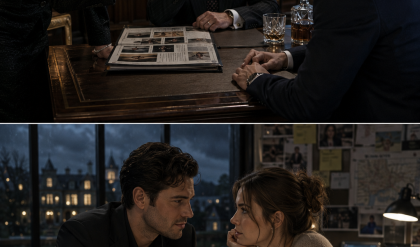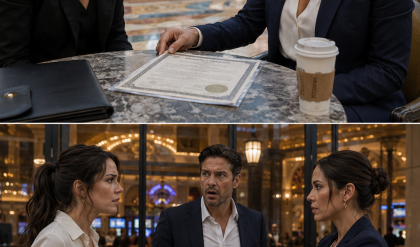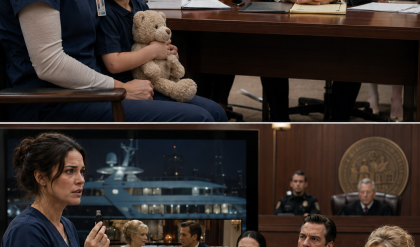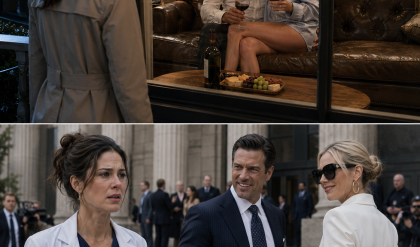
For the next three weeks, Kate and Leo became an accident that kept happening on purpose. She would find him in the library corner, and the chair opposite him would be empty. He would pretend not to have saved it. She would pretend not to notice. Their conversations began with classes and became something else: the best cheap food near campus, the quiet grief of growing up poor in a city built for richer people, the strange loneliness of being surrounded by noise.
Kate learned that Leo was taking business courses but hated every class involving group presentations. He learned that Kate could identify a heart murmur in a simulation lab but could not cook rice without burning it. She talked when she was nervous; he listened when he did not know what to say. Once, after she fell asleep over a chapter on cardiac pharmacology, she woke to find her textbook under her cheek and a fresh coffee beside her hand.
“You don’t have to keep buying me coffee,” she said.
“I know.”
“Then why do you?”
Leo looked toward the windows, where winter pressed black against the glass. “You look like someone should.”
It was not a romantic line. It was too blunt, too awkward. That was why it stayed with her.
What Kate did not know was that Leo spent those same weeks living two lives that were beginning to tear him in half. By day he was a silent student in the back of classrooms. By night he delivered envelopes, moved cash, and sat in cars outside warehouses owned by men who spoke in jokes until someone crossed them. He had not been born into the Costa organization. He had been cornered into it after his younger brother’s gambling debt became his family’s debt, and after Leo returned from the Marines with too much pride to run and too little money to pay. Vincent Costa had offered a solution with one hand and a collar with the other.
Leo told himself he was only a courier. Only a driver. Only a man doing what he had to do until he found a way out.
Then Kate sat at his table and made “only” impossible.
The summons came on a Thursday night cold enough to make the sidewalks glitter. Leo received a text with no punctuation, no name, only an address in the Fulton Market District. He knew better than to delay. The building looked like an old meatpacking facility from the outside, all brick and steel doors, but inside it had been converted into a private club for men who did not want their meetings seen by cameras. The air still carried a metallic chill beneath the cigar smoke.
Vincent Costa waited in the back office, surrounded by polished concrete, hanging copper lights, and two men who laughed at nothing. He had inherited a criminal network from his father and mistaken fear for loyalty ever since. He was thick-necked, restless, and rich in the vulgar way of men who bought watches too large for their wrists.
“Leo,” Vincent said, spreading his arms. “My college boy.”
Leo sat because Vincent pointed at the chair.
A folder lay on the desk. Leo saw the corner of a photograph inside and felt the first thread of dread pull tight.
“You’ve been useful,” Vincent said. “I used to think school was making you soft. Turns out it put you exactly where I needed you.”
Leo kept his face still. “What happened?”
“What happened is Detective Harris finally remembered who pays for his lake house.” Vincent opened the folder and slid a photograph across the desk.
Kate walked out of Cudahy Library in the photo, one hand raised against rain. Behind her, blurred but visible, Leo held the door.
Vincent tapped her face. “Dominic Monroe has a daughter.”
The office seemed to tilt.
“She doesn’t know,” Leo said before he could stop himself.
Vincent’s smile sharpened. “Even better. Innocent people panic cleaner.”
“She’s a student.”
“She’s leverage.” Vincent leaned back. “Monroe has been choking our access to the Calumet routes for two years. He buys aldermen, inspectors, judges. Now I have something he can’t buy twice.”
Leo said nothing.
Vincent’s gaze narrowed. “You’re already close to her. You get her alone tomorrow night. Navy Pier. Library. Alley. I don’t care. You make sure my men can put her in a car without every Monroe dog in Chicago barking.”
“And if her guards interfere?”
“They won’t be around long enough to interfere.”
The two men behind Vincent laughed then, and Leo knew they were laughing because they had been told a young woman’s life was now a business instrument. His mouth went dry. He thought of Kate asleep on her textbook, of her mother’s tea still in a kitchen cabinet, of the way she joked about being broke because saying it plainly would hurt too much.
Vincent slid the folder shut. “Do this right and you’re made. Do it wrong and your brother’s grave won’t be the only one your mother visits.”
Leo stood, but not too quickly. “Tomorrow night.”
Vincent smiled. “That’s my boy.”
Outside, the wind off Lake Michigan cut through Leo’s coat. He walked three blocks before he could breathe. The city around him looked ordinary: headlights, wet pavement, office towers, people leaving restaurants with leftovers in paper bags. That ordinariness made the panic worse. Kate was somewhere in that city, probably worrying about flashcards, unaware that men were discussing whether to break her father with her body.
Leo had been many things he was ashamed of. He had carried money. He had lied. He had stood outside doors and pretended not to hear. But he had never delivered a frightened woman to men like Vincent Costa.
He called Kate.
She answered on the fourth ring, breathless. “Hey. Everything okay?”
“Where are you?”
“Navy Pier. I know, tourist trap, but my mom used to bring me here when she got off long shifts. I needed air.” A pause. “Leo?”
“Stay where people can see you. I’m coming.”
“Why do you sound like that?”
“Because you need to trust me before I deserve it.”
By the time Leo reached Navy Pier, the crowd had thinned to winter stragglers and stubborn couples pretending the cold was romantic. The Ferris wheel glowed through mist. Kate stood near the railing with a paper cup of cider between both hands, her hair blown loose around her face. When she saw him, she smiled, then stopped smiling when she saw his expression.
“You’re scaring me,” she said.
“We have to leave.”
“What? Why?”
He scanned the pier. Fifty yards back, one of the library men stood under a lamp pretending to smoke. Thomas Gray, if Leo remembered correctly. Dominic Monroe’s old guard. Leo had seen him once outside a courthouse, close enough to recognize the pale scar along his jaw.
“Kate,” he said carefully, “those men you keep seeing are real.”
Her face went pale. “I knew it.”
“They’re not here to hurt you. They’re here because of your father.”
“My father is dead.”
“No. He isn’t.”
The first black SUV turned the corner with its headlights off.
Leo saw it and moved before Kate understood. He grabbed her arm and dragged her behind the thick base of a light post as the vehicle lurched toward the curb. Doors opened. Men spilled out. Thomas Gray dropped his cigarette and ran toward them, shouting something that vanished beneath the first crack of gunfire.
Kate screamed.
Leo shoved her down and covered her with his body as glass burst from a ticket booth behind them. He felt stone chips cut his cheek. Somewhere to his left, Gray returned fire, not with panic but with grim precision. Leo drew the weapon he hated carrying and fired only when one of Costa’s men rounded the SUV toward Kate’s hiding place.
The exchange lasted less than a minute, but Kate experienced it as a lifetime broken into fragments: Leo’s coat pressed against her face; Gray cursing as he took a hit near the shoulder; tourists crawling under benches; sirens rising far away; her own hands shaking so hard she could not feel her fingers.
Then Leo shouted, “Kate, Gray’s bleeding. You have to help him.”
“I can’t move.”
“Yes, you can. You’re a nurse.”
“I’m a student.”
“You’re the only one he has.”
That reached her where fear could not. Kate crawled across the slick pavement as Leo covered the distance between her and danger. Gray was propped against a concrete planter, his expensive coat dark with blood. He stared at her as if seeing a ghost.
“Miss Monroe,” he rasped.
Kate pressed both hands over the wound. “My name is Hayes.”
“Not tonight.”
“Shut up and breathe.” Her voice cracked, but her hands steadied because training, even unfinished training, gave terror a place to go. She tore off her scarf, packed pressure where blood pulsed too quickly, and snapped at him when he tried to shift. “I said hold still.”
Gray obeyed.
When the police sirens grew close enough to bounce off the water, Costa’s remaining men fled. Leo got Gray’s keys from him, pulled them toward a black Suburban parked near the service entrance, and drove them down into the underground streets beneath the city before Kate could decide whether to run from him or cling to him.
For several minutes, no one spoke. The tunnel lights flashed yellow over Leo’s face. Gray breathed hard in the back seat while Kate kept pressure on his wound, her scarf soaked through. Her hands were red. Her coat was red. Her whole life felt red.
Finally she said, “Who is my father?”
Gray closed his eyes. “Dominic Monroe.”
The name landed with no meaning at first, then too much. Dominic Monroe owned Monroe Global Logistics, the shipping empire whose blue-and-silver trucks moved through every major route in the Midwest. He appeared in business magazines, charity photographs, and rumors whispered whenever city contracts went where he wanted them to go. Billionaire. Power broker. Ghost king of Chicago’s old underworld, depending on who was talking.
Kate looked at Leo in the rearview mirror. “Did you know?”
His silence answered before he did.
“I suspected.”
“Before or after you started sitting with me?”
“Before I should have kept sitting with you.”
She flinched. “Who are you?”
Leo’s knuckles whitened on the steering wheel. “I work for Vincent Costa.”
Gray swore weakly.
Kate stared at the back of Leo’s head. The library corner. The coffee. The quiet jokes. The way she had begun saving stories to tell him because he listened better than anyone she knew. All of it collapsed inward.
“You were spying on me.”
“Yes.”
Her voice became small, which frightened her more than anger would have. “Was any of it real?”
Leo pulled into an empty loading bay beneath the Loop and stopped the SUV. He turned to face her. “It became real. That doesn’t excuse the lie.”
“You were supposed to hand me over.”
“Yes.”
Gray tried to sit up. “Then I should kill you right here.”
Kate shoved him back with surprising force. “You’re bleeding through my scarf, so maybe schedule murder for later.” Then she looked at Leo. “Why didn’t you?”
His face was pale beneath the tunnel light. “Because you asked if you could sit with me like I was a person. And then you kept treating me like one. I don’t know when that became enough to ruin my life, but it did.”
Kate wanted to hate him cleanly. It would have been easier. Instead she felt betrayal tangled with gratitude, grief tangled with fear, and beneath it all a dangerous new anger that did not shake. Her mother had lied. Her father had hidden. Leo had watched. Costa had hunted. Every man around her had made choices about her life while she memorized anatomy and worried about rent.
She looked down at Gray. “Where is Dominic?”
Gray’s eyes opened. “Lake Forest.”
“Take me there,” Kate said.
Leo hesitated. “Kate—”
She lifted her blood-covered hand, and the expression on her face stopped him. “I’m done being protected by people who never tell me what they’re protecting me from. Take me to my father.”
The Monroe estate in Lake Forest stood behind iron gates, frozen lawns, and enough surveillance cameras to make it look less like a home than a private embassy. The house itself was built of gray stone, with deep windows and chimneys breathing smoke into the winter dark. Men emerged from the shadows before Leo reached the guardhouse. By the time the gates opened, every person on the property seemed to know Kate had arrived.
Dominic Monroe waited in a study lined with books that looked untouched and leather chairs that looked expensive enough to forgive sins. He was in his late fifties, tall, silver at the temples, dressed in a black suit with no tie. The face Kate knew from magazine covers had always seemed cold. In person, when he saw her, it broke.
For one second he was not a billionaire. Not a rumored boss. Not a man whose name made officials return calls in the middle of dinner. He was simply a father staring at the daughter he had watched from a distance for twenty-one years.
“Kate,” he said.
“Don’t.” She stepped into the room, still wearing her bloodstained coat. “You don’t get to say my name like you were waiting for me to come home.”
Dominic stopped.
Gray had been taken away by a private doctor. Leo stood near the door, flanked by two guards who would have gladly broken his neck if Dominic nodded. Kate noticed and hated that she noticed.
“My mother is dead,” she said. “She died worrying about hospital bills. I buried her in a cemetery with a payment plan. Tonight men tried to kidnap me because of you. So before you tell me you loved her, or you did it for my safety, or any other sentence men use when they want their guilt to sound noble, I want the truth.”
Dominic’s jaw tightened, but his eyes shone.
“Your mother saved my life outside St. Luke’s,” he said. “I had been shot. She was off duty and still ran toward me when everyone else ran away. I was not a good man then.”
“Then?”
A bitter smile touched his mouth. “Fair.”
“Did she know who you were?”
“Not at first. Later, yes. She tried to leave. I let her. Then I followed because I was selfish enough to believe wanting her could make me different.”
“Did it?”
“For a while.” He looked away. “When she became pregnant, she told me our child would not be raised inside my world. No guards at school gates. No men with records at birthday parties. No inheritance built on fear. She said if I loved either of you, I would disappear.”
“And you did?”
“I stayed close enough to protect you and far enough to keep you clean.”
Kate laughed once, not because it was funny. “Clean? I had strangers following me through grocery stores. My birth certificate was sealed by bribes. A rival criminal found me through a dirty cop. You call that clean?”
“No,” Dominic said quietly. “I call it failure.”
That honesty robbed her of the next accusation for half a breath.
Leo spoke from near the door. “Costa knows now. He won’t stop.”
Dominic turned his stare on him, and the room cooled. “You. Vincent’s errand boy.”
Leo did not lower his eyes. “Yes.”
“Give me one reason I shouldn’t bury you under the south lawn.”
“Because he saved me,” Kate said.
“He got close to you for Costa.”
“And then he chose differently.”
Dominic’s expression flickered, not with forgiveness, but with recognition. Men like him understood late choices. They were often the only kind left.
For the next hour, the study filled with names, maps, and old resentments. Dominic’s men wanted retaliation. They used phrases like “send a message” and “answer blood with blood.” Kate listened until she realized they were discussing her life as if she were a shipment rerouted through a dangerous port.
“No,” she said.
The men quieted, more because Dominic looked at her than because they respected her.
Kate stood at the edge of the desk. “I spent tonight holding a man’s wound closed because someone decided violence was a reasonable business strategy. I’m not becoming the excuse for more bodies.”
Dominic’s brows drew together. “Costa will not be reasoned with.”
“I’m not asking you to reason with him. I’m asking whether all your money and power have bought you anything better than revenge.”
No one spoke.
Leo watched her with an expression she could not read. Dominic looked at his daughter for a long time, and Kate saw grief move through him, followed by something heavier than pride.
“There is another way,” he said finally.
One of his advisers, a narrow man named Victor Hale, stiffened near the fireplace. “Dominic.”
Kate noticed.
Dominic did too.
He leaned back. “For eight years, I have been moving Monroe Global out of every dirty contract tied to the old families. Quietly. Slowly. Too slowly, Sarah would say. I have records on Costa, on our own people, on officials who sold permits and police routes and court calendars. Enough to end him in federal court if the right witness survives.”
Kate stared at him. “You were working with the government?”
“Not because I became a saint. Because your mother made me understand that a kingdom built on fear is a prison with better furniture.”
Victor Hale stepped away from the fireplace. “This is not the moment to discuss sensitive business.”
Dominic did not look at him. “It is exactly the moment.”
Kate felt the room shift. The men who wanted blood did not all want the same future. Some feared prison more than enemies. Some had grown rich beneath Dominic’s name and had no interest in becoming legitimate. Kate saw then that her father’s empire was not one thing. It was a house with rot in the beams, and Costa was not the only man hoping it would collapse.
“Who told Costa about me?” she asked.
Dominic’s silence answered the question no one wanted spoken.
Leo said, “Detective Harris gave Vincent the file, but someone had to tell Harris which sealed records to ask for.”
Victor Hale’s face remained smooth. Too smooth.
Dominic rose slowly. “Leave us.”
The advisers hesitated. Dominic said nothing else. They left.
When the door closed, Kate looked at her father. “You think the leak came from inside.”
“I know it did.”
“Then Costa isn’t the whole threat.”
“No,” Dominic said. “He is the loud one.”
The plan that followed did not resemble the revenge Kate had feared. Dominic made calls to lawyers, not soldiers. A federal prosecutor arrived through the back entrance at three in the morning, wearing jeans under a wool coat and the expression of a woman who had been waiting years for a dangerous man to stop hesitating. Her name was Ellen Brooks. She spoke to Kate as a witness, not an asset, and that alone made Kate trust her more than anyone in the room.
Leo sat apart, answering questions about Costa’s structure and the threat to Kate. He did not dramatize his role or excuse it. When Brooks asked why he had turned, he looked at Kate and then at the floor.
“I got tired of being owned,” he said.
Kate believed that. She was not ready to forgive him, but she believed him.
By dawn, a temporary protection order had been arranged, Gray had survived surgery, and Kate had learned that her mother left a sealed letter in Dominic’s custody to be given to Kate if the truth ever found her violently. Dominic handed it over with both hands.
Kate waited until she was alone in a guest room bigger than her entire apartment before opening it.
My Katie,
If you are reading this, then the wall I built around you has cracked. I am sorry. I know that apology is too small for the size of the lie, but it is the truest thing I have.
Your father is not the story I told you. He is not innocent, but he is not empty either. I loved him before I forgave myself for loving him. I left because I wanted you to grow without fear. He agreed because, for once, love hurt him more than pride.
Do not let powerful men convince you that your only choices are obedience or cruelty. There is always a third road, but it is usually the hardest because you must build it while walking.
You owe him nothing. You owe me nothing. You owe yourself a life that belongs to you.
Mom
Kate read it three times, then curled on the bed and cried until the winter dawn turned the curtains silver.
In the days that followed, Chicago seemed to continue without noticing that Kate’s universe had split open. Students took exams. Trains ran late. Nurses changed shifts. Snow turned gray at the curb. Kate, however, moved through guarded rooms and legal meetings with the numb concentration of someone learning a new language under threat.
Dominic arranged for her tuition to be paid. Kate refused at first. Then she accepted only after making him agree to fund an emergency scholarship for nursing students who had lost parents, because pride, she decided, was less useful than fairness. She returned to her apartment once under escort and found it already searched. Nothing had been stolen except the shoebox of her mother’s old hospital badges and a framed photograph of Sarah holding newborn Kate.
That theft hurt worse than the broken lock.
Leo found her standing in the kitchen, staring at the empty shelf where the photo had been. He did not step too close.
“I’m sorry,” he said.
“You keep saying that.”
“I keep meaning it.”
Kate turned. “Did you know my mother’s letter existed?”
“No.”
“Did you know Costa would go after her things?”
“No. But I should have thought of it.”
She hated that he did not defend himself. It gave her nowhere to put the anger.
“Why did Vincent own you?” she asked.
Leo leaned against the doorframe, exhausted. “My brother owed money. He was nineteen and stupid and scared. I came home from the service thinking I could fix anything if I stood there long enough. Vincent let me pay the debt by working it off. Then the debt became interest. Then the interest became favors. Then my brother overdosed anyway, and Vincent still had the leash.”
Kate’s anger shifted, not leaving, but changing shape. “Why didn’t you go to the police?”
“I did.”
She blinked.
Leo looked toward the cracked kitchen window. “Two years ago. The detective I spoke to called Vincent before I got home.”
“Harris,” she said.
He nodded. “After that, I survived. That’s not noble. It’s just true.”
Kate looked at him for a long time. The man in front of her had lied. He had also thrown away his safety for hers. Both truths stood together, refusing to cancel each other out.
“I don’t know what to do with you,” she said.
Leo’s mouth tightened. “You don’t have to do anything.”
“That’s the first honest thing anyone has said all week.”
A flicker of pain crossed his face, but he accepted it.
The sealed indictment came faster than anyone expected because Costa panicked. He tried to move money, pressure witnesses, and intimidate an alderman who had already begun cooperating to save himself. Federal agents raided three warehouses before sunrise on a Monday. By noon, half the news anchors in Chicago were saying words like logistics corruption, organized crime, and unnamed billionaire witness with the breathless thrill of people who enjoyed scandal as long as it happened to someone else.
Dominic’s name did not surface publicly, but rumors did. Cameras gathered outside Monroe Tower. Commentators debated whether his legitimate empire had ever been legitimate at all. Kate watched from a protected apartment high above the river and felt no triumph. Every headline represented a choice her father had made before she was born, a compromise her mother had fled, a debt the city had paid in silence.
Then the invitation arrived.
It was not really an invitation. It was a message disguised as one.
A white envelope appeared at the nurses’ station where Kate had returned for a supervised clinical shift. Inside was a card for a wedding at St. Jude’s Cathedral, the upcoming marriage of Victor Hale’s daughter to the son of a prominent judge. Kate did not know either of them. On the back, written in block letters, was one sentence.
COME WATCH YOUR FATHER CONFESS, OR WATCH HIM DIE.
Dominic wanted to cancel the wedding, surround the cathedral, and drag Victor Hale from his house before sunrise. Ellen Brooks disagreed. Victor was too connected, too careful, and so far too insulated by lawyers to touch without exposing Dominic’s cooperation before the larger case was ready. Leo said nothing until Kate asked him.
“He wants you there,” Leo said.
Dominic snapped, “She is not going.”
Kate, who had been silent at the window, turned. “I am tired of men deciding where I exist.”
“This is not a classroom argument,” Dominic said. “This is a threat.”
“I know exactly what it is.” Her voice did not rise. “Victor leaked my identity. Costa tried to take me. Now Victor is afraid Costa will talk, so he wants you dead before you can testify. If I hide, he keeps choosing the ground. If I show up with federal protection and witnesses everywhere, he has to choose in public.”
Dominic looked at Brooks. “Tell her no.”
Brooks studied Kate instead. “She is not wrong.”
“She is my daughter.”
“And she is a legal adult,” Brooks said. “One whose presence may force Hale to reveal the remaining armed network before it disperses.”
Dominic’s face hardened. “You sound very comfortable risking my child.”
Brooks did not flinch. “No. I sound like a prosecutor who has seen too many daughters buried because powerful fathers waited too long to tell the truth.”
The room went quiet.
Kate walked to Dominic. For the first time, she saw not only the dangerous man, but the tired one. The father who had made unforgivable choices and was now being punished by the one thing he could not control: his child’s courage.
“I’m not doing this for your empire,” she said. “I’m doing it for my mother’s third road.”
That was how Kate found herself in ivory satin at St. Jude’s Cathedral four days later, pretending to be part of a wedding party she barely knew. The dress had been chosen by Victor Hale’s wife, who kissed Kate’s cheeks with cold lips and called her “dear” while her eyes measured every guard nearby. Dominic sat in the front pew. Leo stood at Kate’s side as her assigned escort, wearing a black suit and an earpiece hidden beneath his hair.
“You look like you hate weddings,” Kate murmured as organ music swelled.
“I hate crowds with exits I don’t control.”
“That’s oddly romantic.”
His eyes softened for half a second. “You look beautiful.”
Kate faced forward because the words hit too deeply. “Don’t.”
“I know.”
“No, you don’t. I can handle fear. I can handle anger. I can’t handle almost forgiving you every time you sound like someone I could have loved before I knew better.”
Leo swallowed. “Could have?”
She did not answer.
The ceremony began. The bride walked. Guests turned. Cameras flashed. Kate watched Victor Hale in the second row. He did not look nervous. He looked relieved. That frightened her.
Then, above the altar, the blue glass shattered.
The cathedral became chaos.
Now, crouched behind the baptismal font as screams rose around her, Kate understood that the attack was not going according to anyone’s plan. Federal agents were present, yes. Dominic’s security was present. But the first shots had struck positions where agents were hidden, not where Dominic sat. Victor had not merely planned a dramatic threat.
He had known the protection layout.
Someone had given him the federal plan.
Leo pressed a hand to his bleeding sleeve and scanned the side aisles. “There’s a second leak.”
Kate’s heart pounded. “Who?”
“I don’t know.”
Across the cathedral, Victor Hale stood in the center aisle holding a gun low at his side, but he was not aiming at Dominic. He aimed at Ellen Brooks, who had been posing as a guest three rows from the back. One of Victor’s men dragged her into the aisle, her face bloodless but furious.
“Dominic,” Victor shouted, “you always were too sentimental. First the nurse, then the daughter, now the government. You could have owned this city until you died, but you wanted forgiveness. Do you know what forgiveness is worth in our world? Nothing.”
Dominic stepped away from his guards. “Let her go.”
Victor laughed. “Still giving orders in a burning house.”
Kate looked at Leo. “He doesn’t want me.”
“No,” Leo said. “He wants your father to trade himself.”
“And if Dominic does, Victor kills them both.”
Leo’s silence confirmed it.
Kate looked around the cathedral. Guests huddled beneath pews. A flower girl sobbed into her mother’s lap. The bride stood frozen near the altar, her white dress shaking. Kate thought of her mother running toward a bleeding stranger outside St. Luke’s. Not because it was safe. Because someone had to.
“Give me your phone,” Kate said.
“What?”
“Your phone.”
Leo handed it over because he had learned the cost of underestimating her. Kate opened the internal channel Ellen Brooks had shown her and pressed the call live. Then she stood.
Leo grabbed her wrist. “Kate.”
She looked down at him. “You said I was the reason. Let me be the reason this stops.”
Before he could answer, she stepped into the aisle.
The cathedral quieted in broken layers. First the people nearest her. Then Victor’s men. Then Dominic, whose face emptied of color.
“Victor,” Kate called, her voice shaking but carrying. “You wanted me here. So here I am.”
Victor turned. His expression flickered with irritation. “Get down, girl.”
“No.” She walked slowly, hands visible. “You leaked my name to Costa because you wanted a war my father would be blamed for. You stole my mother’s photograph because you wanted him angry. You threatened this wedding because you needed him dead before he testified. But you made one mistake.”
Victor’s eyes narrowed. “Careful.”
Kate lifted Leo’s phone slightly. “You thought I wanted a throne.”
Dominic stared at her, understanding dawning.
Kate continued, louder now. “I don’t. I don’t want your routes or your judges or your men who think courage means making other people afraid. I want every person in this church to leave alive. I want my mother’s name clean. I want the city you used like a private bank to know exactly who bought whom.”
Victor smiled, but the smile twitched. “And you think a speech does that?”
“No,” Kate said. “A live federal channel does.”
For one fatal second, Victor looked toward the back of the cathedral, where he thought Ellen Brooks was his only legal threat. In that second, Leo moved. Dominic’s guards moved. Federal agents who had survived the first strike rose from positions Victor had not been told about because Brooks had suspected the second leak and changed half the layout without telling anyone except Kate.
The struggle was loud, brief, and terrifying, but it did not become the massacre Victor wanted. Leo reached Kate before one of Victor’s men did and pulled her down behind a pew. Dominic crossed the aisle not toward safety, but toward his daughter. When it was over, Victor Hale lay pinned beneath two agents, shouting for lawyers who would no longer answer quickly enough. Ellen Brooks, bruised but alive, retrieved Leo’s phone from the aisle and gave Kate a look that held both reprimand and admiration.
Dominic knelt beside Kate. “Are you hurt?”
“No.”
He touched her hair with trembling fingers, then withdrew as if afraid he had not earned the right. “Your mother would have been proud.”
Kate looked at the broken glass glittering over the church floor. “She would have been furious first.”
Dominic laughed once, a broken sound close to a sob. “Yes. She would have.”
The public story unfolded over months, not days. Vincent Costa was arrested while trying to flee Illinois. Detective Harris accepted a deal and named names until his usefulness ran out. Victor Hale’s trial became a civic earthquake. Judges resigned. Aldermen retired suddenly for “family reasons.” Warehouses were seized. Shell charities collapsed. Monroe Global Logistics survived only after Dominic surrendered majority control to a court-supervised trust, opened its books, and agreed to testify against the network he had once helped build.
Some people called him brave. Kate did not. Not at first. Bravery, to her, would have been leaving sooner, telling the truth sooner, trusting Sarah’s daughter sooner. But she came to understand that late courage could still save lives, even if it did not erase the years before it.
Dominic was not sent to prison for the rest of his life, but he did not walk away untouched. He paid fines large enough to dent even a billionaire’s fortune. He gave testimony that made him enemies he would fear until he died. He funded a victims’ compensation trust without naming it after himself. When asked by a reporter why, he looked toward Kate, who stood beside Ellen Brooks on the courthouse steps, and said, “Because a good woman once ran toward me when she should have run away, and I spent twenty-one years misunderstanding what that meant.”
Kate returned to nursing school in the fall.
Not quietly. Nothing about her life was quiet anymore. Reporters waited outside campus the first week until students got bored and started standing in front of cameras pretending to ask about homework. The university renamed a scholarship for Sarah Hayes, RN. Kate insisted the scholarship serve students who worked while studying, because grief was hard enough without choosing between textbooks and heat.
Leo entered witness protection and refused it three days later because his mother would not leave Chicago. Instead, he testified, accepted charges for his own part, and served eighteen months in a federal facility. Kate visited once near the beginning. She sat across from him in a beige room that smelled of disinfectant and old coffee, and for a long moment they only looked at each other.
“You cut your hair,” she said.
“You hate it?”
“I didn’t say that.”
He smiled faintly. “How’s school?”
“Hard. Good. Real.” She folded her hands. “I’m still angry.”
“You should be.”
“I miss you.”
His face changed then, the guardedness cracking. “You don’t have to.”
“I know.” Kate looked at the scratched table between them. “That’s why I can say it.”
They did not make promises. Kate had learned to distrust promises made under pressure. But when Leo was released, he found work through a veterans’ reentry program funded anonymously until Kate discovered Dominic’s involvement and made him put his name on it. Leo started as a warehouse safety coordinator for one of the cleaned-up logistics firms, then took night classes for social work because, he told Kate, “I know too much about how men get trapped to spend the rest of my life pretending cages are choices.”
Two years after the cathedral shooting, Kate stood again inside St. Jude’s. The stained glass above the altar had been restored, but not exactly. At Kate’s request, one small pane was left clear. Through it, daylight entered without color, honest and plain.
This time there were no armed men in the aisles. No staged wedding. No trap. The church hosted a free clinic in the parish hall every month, staffed by volunteer nurses, physicians, and students who needed hours. Kate, now finishing her final clinical rotation, checked blood pressure beside a folding table stacked with donated coats.
Dominic arrived late, as he always did when entering ordinary places where no one feared him. He carried boxes of gloves and children’s cold medicine. His hair had gone whiter. He looked smaller without power arranged around him.
“You’re late,” Kate said.
“I was buying the wrong kind of juice boxes, apparently. A woman in aisle six corrected me with great authority.”
“Good. You needed supervision.”
He smiled. Their relationship was not simple, but it was alive. Some weeks they had dinner. Some weeks they argued. Sometimes Kate asked about her mother, and sometimes Dominic answered until grief made both of them quiet. He never again called protection love without explaining the truth beneath it.
Across the hall, Leo helped an elderly man fill out a housing form, his sleeves rolled up, his posture relaxed in a way Kate once would not have believed possible. He looked over and caught her watching. Instead of looking away, he smiled.
Dominic noticed.
“You love him,” he said.
Kate kept sorting blood pressure cuffs. “That is a dangerous thing for a father with your history to comment on.”
“I only meant that he looks at you the way I looked at your mother before I ruined everything.”
She glanced at him. “That’s not comforting.”
“No,” Dominic admitted. “But it is honest.”
Kate watched Leo laugh softly at something the old man said. “I don’t know what we’ll become.”
“That may be healthier than thinking you do.”
She looked at her father, surprised.
Dominic shrugged. “I am trying to learn wisdom before death makes it useless.”
Later that evening, after the clinic closed and the last patient left with a bag of groceries and a referral card, Kate found Leo in the nave of the cathedral. He stood beneath the repaired window, looking up at the one clear pane.
“You okay?” she asked.
“Yeah.” He glanced at her. “This place used to be the worst day of my life.”
“Only used to be?”
He nodded toward the parish hall. “Now it’s where Mrs. Alvarez called me handsome and asked if I had a brother for her niece.”
Kate laughed. The sound echoed upward, light and startled.
Leo turned fully toward her. “Can I ask you something?”
“Depends.”
He looked nervous, which still amazed her after everything. “Can I sit with you?”
The question carried the library, the lie, the pier, the cathedral, the prison visiting room, and all the long work of becoming honest after dishonesty. Kate felt the old ache and the newer tenderness beside it. Healing, she had learned, was not the erasure of wounds. It was the choice not to keep bleeding on people who had not cut you.
She took his hand.
“Yes,” she said. “But this time, no secrets at the table.”
“No secrets,” Leo promised.
Outside, Chicago shone cold and bright along the lake, the kind of city that could break a person and still offer them a skyline beautiful enough to make rebuilding feel possible. Kate Hayes Monroe, daughter of a nurse and a man who learned decency late, stepped out of the cathedral beside the former enemy who had chosen to become more than what owned him.
She was not an orphan. She was not a pawn. She was not the heir to darkness.
She was a woman building the third road while walking it, one honest step at a time.
THE END