Daniel’s breath caught in his throat, a cold, oily sweat breaking out across his palms. His father hadn’t created this competition to find a worthy successor. He had engineered it because he viewed his own children as an experimental livestock breeding program. He had spent twenty years systematically pitting them against one another, mapping their psychological fractures, encouraging their betrayals, and treating their suffering as a laboratory data point.
He didn’t love Garrison’s ambition. He didn’t admire Helena’s intellect. He didn’t care if Julian died in a ditch on the highway. They were not his family; they were specialized corporate instruments designed to be broken, ground down, and remolded until only the single, most monstrous weapon remained to protect the Whitmore Petrochemical balance sheet.
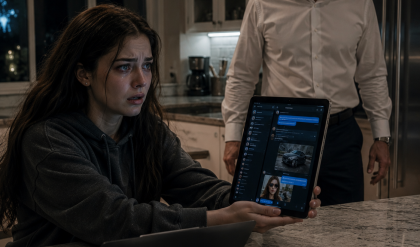
The final, crushing realization hit Daniel like a physical blow as he scrolled to the bottom of the log directory. There was a folder with his own name on it: Daniel – Evaluation.
Inside was a single, recent memo written by Arthur to the board’s executive committee:
“Daniel remains genetically defective. He possesses an empathetic bias that renders him entirely unviable for executive leadership. I have maintained his position solely to act as a psychological foil—a soft target to provoke the predatory instincts of his siblings. He will be liquidated from the corporate structure on the night of the solstice alongside the other losers.”
Daniel sat in the dark, the screen glowing against his pale face, the silence of the room absolute. The entire narrative of his childhood—the cold dinners, the withheld praise, the constant, shifting demands for perfection—was not a manifestation of a harsh, old-fashioned parenting style. It was the deliberate, soulless calibration of a machine.
The night of the summer solstice arrived with a heavy, suffocating Texas heatwave. The grand ballroom of the Newport-style Whitmore estate was filled with five hundred of the nation’s most powerful figures: politicians, investment bankers, and oil barons, all waiting for the coronation.
Garrison stood near the ice sculptures, his eyes bloodshot, a manic, triumphant smile on his face; he had successfully intercepted Helena’s private banking data that morning, intending to blackmail her before the board vote. Helena stood across the room, her face a rigid mask of porcelain and diamonds, her personal security detail standing within arm’s reach because she knew Julian had hired a private investigator to track her movements. They looked like ghosts dressed in high fashion, their souls completely eroded by six months of psychological warfare.
Arthur Whitmore stepped onto the elevated mahogany stage, the crowd immediately falling into a reverent, terrified silence. He adjusted the microphone, his eyes scanning the room until they found his children standing like soldiers awaiting execution.
“Before we announce the audit results and name the next Chief Executive of Whitmore Petrochemical,” Arthur said, his voice echoing off the high stone ceilings, “I require my children to join me on stage.”
Garrison stepped forward first, his posture aggressive, his chin tilted up. Helena followed, her heels clicking like a firing squad. Julian walked up with a slow, defensive stride, his hand hovering near his jacket pocket.
But Daniel didn’t move.
He remained at the very back of the ballroom, standing near the service exit. He wasn’t wearing a tuxedo. He was wearing a simple jacket, his canvas travel bag resting at his feet. Beside him stood Clara, her hand slipped securely into his, her presence the only genuine, un-transactional reality left in the building.
“Daniel,” Arthur’s voice boomed through the speakers, sharp and authoritative, a dangerous edge cutting through his professional tone. “Get up here. The board is waiting.”
Five hundred pairs of eyes turned as one to look at the youngest Whitmore.
Daniel looked back at his father. He didn’t see a titan of industry. He didn’t see a fearsome patriarch. He saw only a hollow, old man sitting on a throne of oil and blood, completely alone inside a labyrinth of his own design.
“No,” Daniel said.
The word was not shouted. It was delivered with a quiet, devastating calmness that traveled through the silent room like a shockwave.
Garrison let out a sharp, mocking laugh. “What’s the matter, Danny? Don’t have the stomach to watch the real adults take the prize?”
“The prize is yours, Garrison,” Daniel said, his eyes never leaving his father’s cold, unblinking glare. “You can have it. You can have the forty-second floor, the offshore accounts, the private jets, and the five-billion-dollar empire. You can have the throne. But you should know that the man who built it never loved a single one of you. You aren’t his children. You’re just the surviving inventory.”
Helena frowned, a flicker of genuine panic crossing her perfect face as she registered the total absence of fear in her younger brother’s voice. “Daniel, stop making a scene. Get up here or leave.”
“I am leaving,” Daniel said. He picked up his canvas bag with his free hand, his fingers tightening around Clara’s. He looked at his father one last time, a look of profound, echoing pity in his eyes. “Enjoy your machine, Dad. I hope it keeps you warm when the dark comes.”
Daniel turned his back on the stage, the board, the five billion dollars, and the five hundred spectators of his family’s public execution. He pushed open the heavy service doors, stepping out into the warm, clean Texas night air, the sound of the applause fading into nothingness behind him.
He didn’t look back to see who won the war. As the heavy oak doors clicked shut behind them, Daniel realized that in a game where the only prize was becoming the monster who built the maze, the ultimate, most absolute victory was simply choosing to walk away.