I called my carrier from the same parking lot, my voice so steady that the representative on the other end sounded almost more nervous than I was. “I need to change my number tonight,” I told her, and when she asked why, I said, “Personal safety,” because that was the closest legal phrase to the truth. She hesitated, then processed the request, telling me the new number would activate within two hours. Two hours until my old life would be calling a dead line. Two hours until my mother’s voice, my father’s disappointment, my brother’s excuses, and Brenna’s tears would all hit a wall they could not charm their way around.
I drove to an extended-stay hotel on the other side of the city and paid cash for a week. The room was plain in the way temporary rooms always are, with a beige comforter, framed prints of places nobody had been, and a humming air conditioner that smelled faintly of dust. I sat on the edge of the bed and watched the clock on my phone while the last minutes of my old number disappeared. When it finally switched over, there was no ceremony, no thunderclap, no sense of justice descending from above. There was only a quiet screen, a locked door, and the first complete silence I had known since Brenna said Hayden’s name.
I did not sleep that night. Instead, I made lists, because lists had always been how I turned fear into procedure. Bank accounts. Insurance. Work leave. Attorney. Housing. Digital footprint. Property records. Divorce. I wrote everything down in a hotel notepad with a cheap pen that skipped when I pressed too hard, and by morning, my grief had become a sequence of tasks. That was not denial; it was survival in a language I understood.
The next morning, I called my supervisor and requested personal leave. He asked if everything was all right, and I told him there was a family situation, which was both true and insufficient. He was a decent man who respected boundaries, so he approved three weeks without prying. After that, I drove to my bank, asked to speak with a specialist rather than a teller, and explained that I needed to open an individual account and move exactly half of the funds from the joint account I shared with my wife. “Does your spouse know?” the woman asked gently, because banks have learned to recognize the tremor beneath domestic paperwork. “We’re separating,” I said. “I’m taking exactly half. Nothing more.” She nodded, printed the forms, and by noon, the math of my marriage had been divided cleanly down the middle.
There was something almost soothing about the fairness of it. Half the savings. My paycheck redirected. Brenna removed from my health insurance, car insurance, emergency contacts, and every quiet administrative thread that had tied her to my life. When the insurance representative asked whether I wanted to wait until the divorce was final, I said, “No. Remove her today.” There was a pause on the line, the brief human pause of someone recognizing a story they would never hear, and then she said she would take care of it.
In the parking lot afterward, I pulled up the county property records on my phone. The house had been mine before Brenna and I married, bought with years of careful savings while Hayden was still borrowing rent money from our parents. I had refinanced after the wedding, but I had never added her name to the deed, mostly because paperwork had slipped beneath more urgent things. At the time, I had considered it procrastination. Sitting in my car with the October sun hot through the windshield, I understood it as the one favor my past self had accidentally done for my future.
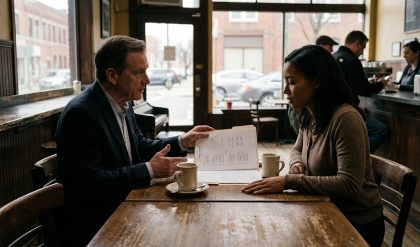
By early afternoon, I was in the office of the most expensive divorce attorney in Denver. Her name was Elaine Mercer, and she had the kind of stillness that belonged to people who had spent years watching human disasters arrive in expensive shoes. Her office had floor-to-ceiling windows, a stone-gray sofa, and artwork so abstract it seemed intentionally unwilling to comfort anyone. She listened without interrupting while I told her about Brenna, Hayden, the pregnancy, and the family meeting. When I finished, she folded her hands on the desk and asked, “What do you want?”
“Divorce,” I said. “Clean. She gets what the law requires and nothing more. The house is mine. No alimony if we can avoid it. No direct communication. Everything goes through you.” My voice sounded flat even to me, but flat was useful. Flat did not beg. Flat did not negotiate for scraps of dignity. Elaine studied me for several seconds, then said, “Most people in your position want closure, or at least a confrontation.” I looked at the city through the glass behind her and said, “I don’t want either.” After a moment, she nodded. “I can work with that.”
Two days later, she called my new number while I was sitting at the hotel desk organizing documents into labeled folders. “The divorce petition has been filed,” she said. “A process server delivered it to your wife an hour ago, along with a thirty-day notice to vacate the property.” I stared at the cheap hotel curtains and felt nothing dramatic, only the small click of a door locking properly. “Good,” I said. Elaine paused. “She is going to want to talk to you.” “No,” I replied. “Your family will try to contact me through my office, your friends, and possibly me.” “Refer them to the documents. Do not engage.” There was another pause, longer this time. “You are very calm about this.” I picked up the folder marked bank and placed it in the bag beside me. “I made my decision. Now I’m executing it.”
That same day, I dismantled my digital life. I deleted my Facebook account, not deactivated it, but requested permanent removal. I deleted Instagram, LinkedIn, old message apps, every platform where someone might find a thread and pull. My personal email had been connected to family birthdays, old holiday photos, neighborhood newsletters, school friends, and a thousand tiny hooks from a life I no longer intended to answer for. I changed the password to random characters I did not memorize, removed the recovery options, and locked myself out permanently. Then I created a new email with a different structure, professional and anonymous enough to belong to anyone.
It is strange how quickly a person can become difficult to reach. We tell ourselves that modern life makes disappearance impossible, that everyone is searchable, traceable, tagged, archived, and permanently exposed. That is true for people who still want to be found. It is less true when you stop cooperating with the world’s appetite for access. By sunset, I had not erased myself completely, but I had removed every easy path, and people like my family had always preferred easy paths.
During the second week, the receptionist at my office called. “Your wife came by,” she said carefully. “She was crying and asked where you were.” I was standing in the hotel kitchenette, watching coffee drip into a paper cup. “What did you tell her?” “Nothing,” she said. “But she was persistent.” I thanked her and told her that if anyone from my family contacted the office, they should be given only Elaine Mercer’s number. An hour later, Elaine called to say Brenna had shown up at her office and Hayden had come separately, both wanting to speak with me. My parents had sent a formal letter requesting family mediation, and Hayden had included a handwritten letter that was seven pages long.
“Do you want me to forward it?” Elaine asked. I considered it for exactly three seconds, not because I was tempted, but because three seconds seemed like the amount of respect one gives a dead thing before burying it. “Shred it,” I said. Elaine was silent, then almost softly replied, “You are serious.” “Completely.” “All right,” she said. “I’ll handle it.”
By the end of the second week, I had found an apartment in Albuquerque. It was far enough from Denver to make casual searching useless, but close enough that I could transfer within my company without wrecking my career. I applied online, passed the credit check, and signed the lease remotely. The apartment had white walls, desert light, and no memories. That was all I wanted from it. When I packed my car on Sunday morning, everything that mattered fit easily into the trunk and back seat, which taught me something I wish I had known earlier: the life you carry because you think you must is usually much heavier than the life you actually need.
I left before dawn. The highway was almost empty, the radio was off, and the darkness over the road felt less lonely than the kitchen where Brenna had confessed. Three hours into the drive, I passed a billboard advertising a reunion venue, a smiling multigenerational family gathered around a long table beneath the words, Make Memories Together. I glanced at the date on the dashboard: October 15. Thanksgiving was five weeks away, and I could picture my mother already trying to plan seating around an absence she had not accepted. I pressed the accelerator and kept driving.
Albuquerque was flat, brown, and nothing like home, which made it exactly right. I transferred into the company’s local branch with the same title and a new supervisor who asked why I had relocated. “Fresh start,” I said, and he did not push. People can sense a locked gate if you build it well enough. I found a gym with old equipment and clean showers, a coffee shop that made decent espresso, a grocery store where nobody knew what kind of cereal Brenna used to buy, and a therapist whose office smelled faintly of cedar and peppermint tea.
The therapist was my idea. I did not go because I was falling apart; I went because I wanted to make sure I would not. There is a difference between strength and untreated damage, and I did not trust myself enough to confuse the two. In our first session, she asked whether I felt angry. I told her I felt clear. She watched me for a moment over the rim of her glasses and said, “Clarity after betrayal can be protective, but it can also become armor you never take off.” I appreciated that she did not insult me with easy sympathy. “Then help me make sure it stays a tool,” I said, “not a prison.”
Elaine called every Wednesday with updates that sounded more like weather reports than family news. Week three: Brenna had hired an attorney and wanted to discuss settlement terms. Week five: my parents had hired their own lawyer and repeated their request for mediation. Week six: Hayden sent another letter, longer this time, with apologies folded around excuses. I shredded all of it through Elaine, never reading a single page. Some people would call that avoidance, but I understood it as discipline. A confession is not a gift when it arrives only after consequences.
November arrived with cold mornings and yellow leaves gathered along the sidewalks outside the lab. My therapist asked about Thanksgiving, and I told her I had signed up to volunteer at a community shelter. “Your family will expect you,” she said. “They can expect whatever they want,” I answered, and she waited for the flinch that never came. On Thanksgiving morning, I showed up before sunrise, tied on an apron, and served food until my feet hurt. The gratitude there was simple, unscripted, and immediate. No one asked me to forgive betrayal so the table would look better in photographs.
I bought Chinese takeout on the way home, watched the Dallas Cowboys lose, and fell asleep on the couch with the television muttering softly in the dark. It was the quietest Thanksgiving I had ever had and somehow the first honest one. I did not hear about my family’s Thanksgiving until three months later, when I was sitting in my coffee shop and someone said my name as if testing whether the sound still belonged to me. I looked up and saw Wesley Harris, an old college friend I had not seen in five years. His face moved from surprise to relief to discomfort so quickly that I knew he was carrying news before he opened his mouth.
“Holy hell,” he said, dropping into the chair across from me after I gestured. “I’ve been trying to find you for months. You vanished completely.” I wrapped both hands around my coffee, letting the heat settle into my palms. “I know.” Wesley leaned forward, lowering his voice. “Your family has no idea where you are. Your mom is losing her mind. I saw them at Thanksgiving, and it was brutal. She set a place for you. Your dad drank half a bottle of whiskey. Nobody knew what to say.”
I said, “Okay,” because there was nothing else to say. Wesley stared at me as if I had answered in a foreign language. “That’s it? Okay?” I looked through the window at people crossing the parking lot, their coats pulled tight against the wind. “What do you want from me?” He struggled with that, because people who believe in family above truth often assume the correct emotion should arrive automatically. Finally, he asked what happened, and I told him plainly. “My wife got pregnant. The baby is my brother’s. My parents knew before I did. They all had a meeting without me to decide how to handle it.”
Wesley’s expression changed from confusion to shock. “That’s horrible,” he said. “But you just disappeared? You didn’t even try to work it out?” I almost smiled, not because it was funny, but because the script was so predictable. “What was there to work out?” “I don’t know,” he said, shifting in his chair. “They’re still your family.” I looked at him for a long moment. “Are they?” He had no answer, so he gave me another one he thought might matter. Hayden had lost his job after rumors spread. My mother could not sleep. My father looked ten years older. Brenna was living with the consequences of a story she had once thought she could manage.
“Doesn’t that matter to you?” Wesley asked. His voice had softened, but his eyes were searching for something I no longer kept on display. “Why would it?” I asked. He leaned back, disturbed now. “You’re different.” “I’m better,” I said. That was not cruelty. It was the first honest assessment I had made of myself in years. Better did not mean untouched or saintly. It meant no longer available for people who mistook my endurance for permission.
Twenty minutes after I left the coffee shop, Wesley texted me from a number I did not recognize. He had found my new work profile online before I deleted the last trace of it. He wrote that my mother was still calling my disconnected number, that my father looked sick, that the whole family was falling apart. I stared at the message in the parking lot outside my apartment and thought about blocking him. Instead, I replied, “I feel fine. That’s the point.” Then I blocked him anyway.
In January, Elaine called while I was at the gym. I stepped off the treadmill, sweat cooling on my neck as she said Brenna had given birth to a girl. Because the child had been conceived while we were still legally married, Elaine was required to notify me of certain documents, even though Hayden was listed as the father. “She sent a photo and a letter,” Elaine said. “Do you want them forwarded?” I looked at the rows of machines, the bright overhead lights, the mirrored wall reflecting a man I was still learning to recognize. “No. Shred both.”
I did not hate the baby. That was the part people would have found hardest to understand. She was innocent, born into wreckage she had not chosen, and I hoped she would have a better family than I did. But innocence does not create obligation where betrayal has burned the ground clean. She was Hayden’s daughter, Brenna’s daughter, my parents’ granddaughter. She was not mine. I got back on the treadmill and finished my five miles.
Spring settled over Albuquerque with dust, wind, and a kind of hard bright beauty I had not expected to love. I met Portia at a public lecture at the university, where I had been asked to speak on biochemical preservation methods for historical documents. She was a museum archivist, calm and attentive, with dark hair pinned loosely at the back of her neck and questions that were thoughtful without being performative. After the lecture, we got coffee. She did not fill silence out of panic, which immediately set her apart from most people. The third time we went out, she asked why I had moved to New Mexico, and I told her everything.
I did not soften the story. I told her about Brenna at the kitchen table, Hayden, my parents, the meeting, the phone calls, the blocking, the hotel, the attorney, the disappearance. Portia listened with the patience of someone trained to handle fragile things without trying to repair them badly. When I finished, she asked, “Do you think you’ll ever reconcile?” “No,” I said. “Do you hate them?” “No. I just don’t have room for them anymore.” She nodded, and that was the moment I trusted her more than I had intended to. She did not argue with my boundary as if love required me to keep bleeding.
In April, I was promoted to senior biochemist. My supervisor said he had been impressed by my focus, and I almost laughed because focus was what remained when everything else had been cut away. I celebrated by taking Portia to dinner at a small restaurant with warm lights and tables close enough that strangers’ conversations became soft background noise. She met some of my coworkers a few weeks later, and they liked her easily, which mattered more than I expected. Slowly, without ceremony, Albuquerque stopped being the place I had fled to and became the place where my life was actually happening.
Therapy became monthly. I slept well. I ate well. I worked hard without using work as anesthesia. I did not have intrusive fantasies about revenge, did not rehearse speeches in the shower, did not imagine myself walking into some holiday dinner and watching them collapse under the weight of my words. The revenge people expected from me would have required too much participation. My absence was enough. It was not fire. It was vacuum.
In May, Wesley emailed because I had forgotten to block his email address. He said my father had suffered a heart attack, a real one this time, though he was stable. My mother was telling people she wanted to hear my voice just once. Hayden and Brenna were fighting constantly. The baby cried through the night, my parents were exhausted, and the house had become a place where no one rested. Wesley ended the message with, “I know you don’t care, but I thought you should know.” I read it twice, then closed it without replying.
That night, I told my therapist about the email. She asked what I had felt when I read it, and I tried to answer honestly rather than nobly. I did not feel joy. I did not feel grief. I felt the distant recognition one feels when hearing that a storm damaged a town one used to live in. “Does that concern you?” she asked. I thought about my father’s voice in the background of my mother’s call, telling her we would all sit down and work it out after they had already worked around me. “No,” I said. “It confirms that consequences can arrive late and still be accurate.”
By July, it had been one year since the Tuesday evening that ended my marriage. I marked the day without planning to. I woke before my alarm, made coffee, and sat on the balcony watching the desert morning open pale and gold over the buildings. One year earlier, I had discovered that my family had voted me expendable. Now I had a clean apartment, a better job, a therapist who no longer looked worried when I spoke, friends who knew only the person I was choosing to become, and a woman who did not ask me to translate pain into forgiveness for her comfort.
Portia came over that evening with takeout and a bottle of wine. I told her what day it was, and she set the food on the counter before asking, “How do you feel?” I expected to search for the answer, but it was already there. “Good,” I said. “Really good. No regrets, except that I didn’t see them clearly sooner.” She touched my face with a tenderness that did not pity me. “You survived something cruel without becoming cruel,” she said. I did not know how to answer, so I held her until the food went cold.
In August, Wesley sent a longer email. Hayden and Brenna had broken up. Hayden had lost another job, this time after an ethics complaint, and he was drinking too much. Brenna was essentially raising the baby alone under my parents’ roof, where resentment had begun to seep through the walls. My mother had become obsessed with finding me and had apparently hired someone to track me down. “This whole thing destroyed them,” Wesley wrote. “I guess that was the point, huh?”
I stared at that line for a long time. It had not been the point. Destruction required a kind of attention I had refused to spend on them. The point had been survival, then peace, then building a life not organized around their needs. But I could understand how it looked from the outside, especially to people who believed the betrayed person was responsible for preventing everyone else from drowning in the betrayal. I closed the email and did not respond.
Three days later, Elaine called. “We have a situation,” she said, and I knew before she explained. My mother had hired a private investigator. Elaine had already shut down the first attempt through legal channels, but my parents were pushing harder, claiming they needed my location for estate planning purposes. “It won’t work,” Elaine said. “But desperation makes people creative.” I stood by the lab window, watching the heat shimmer over the parking lot. “What do you recommend?” “Restraining orders if they continue. Documentation now. We make it legally dangerous for them to keep searching.”
“Do it,” I said. Elaine hesitated. “This will make reconciliation more difficult.” “There won’t be reconciliation.” “You’re certain?” I looked at my reflection in the window, the lab coat, the calm face, the man who had finally learned that certainty could be mercy when uncertainty kept the wound open. “Ever,” I said. “Do it.” She agreed, and I returned to the protein sequencing project waiting on my desk. The samples did not care about bloodlines. I liked that about science.
That night, Portia made pasta from scratch in her apartment, the kitchen windows fogging faintly from the boiling water. Halfway through dinner, she said, “I think they know what city you’re in.” I lowered my fork. She looked apologetic but not ashamed. “Wesley posted something vague about seeing an old friend in New Mexico. Someone commented asking if it was you. I searched your old name because I was curious, and I’m sorry.” I sat with that for a moment, feeling for panic and finding none. “They know the state,” I said. “Maybe the city. Not my address. Not my number. Not me.”
Portia reached across the table and took my hand. “Good,” she said, “because I’m not sharing you with people who threw you away.” Something shifted then, not loudly, but permanently. I had been thinking of my new life as a structure I was building against the old one, a wall raised in opposition to damage. But Portia’s hand in mine made me understand that a wall is not the same as a home. I was not only keeping them out anymore. I was keeping something worth protecting in.
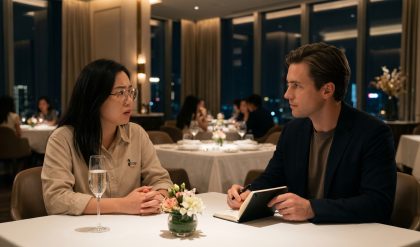
Two years after I left, I was promoted again, this time to senior research lead. The position came with my own team, a larger office, better funding, and the kind of responsibility that once would have terrified me because my old life had always kept one hand around my ankle. I took Portia to dinner, and she raised her glass with a smile that made the candlelight seem warmer. “I’m proud of you,” she said. “I couldn’t have done it without you keeping me sane.” She shook her head. “You were already sane. I just made sure no one convinced you otherwise.”
I looked at her across the table and realized I wanted to marry her. Not because she had saved me, because she had not. Not because I needed a replacement family, because need had made me tolerate too much before. I wanted to marry her because she was honest, steady, and real, and because being with her did not require me to betray myself in small daily installments. The thought did not frighten me. That was how I knew it mattered.
The updates from Wesley continued every few months, though I never answered them. Hayden was working part-time at a gym and barely seeing his daughter. Brenna was telling some people I had abandoned her, though most knew enough of the story to avoid taking her side too loudly. My parents were helping with the child, but the arrangement had turned sour, as guilt-based arrangements usually do. Their church knew. Their neighbors knew. The golden child had lost his shine, the loyal daughter-in-law had lost her script, and my parents had lost the son they assumed would always come back because he always had before.
I read those emails the way I read incident reports at work: not with pleasure, not with anguish, but with detached comprehension. Consequences had patterns. A family that protects betrayal over truth does not become stronger; it becomes a room full of people watching one another for the next act of cowardice. I had not cursed them. I had not exposed them publicly. I had simply removed the one person they had counted on to absorb the cost, and without me, the bill had come due.
In September, an invitation arrived at Elaine’s office. My cousin Flynn was getting married, and he had included a plus-one, along with a short handwritten note saying he understood if I could not come. Flynn had always been decent, which made the decision sadder but not harder. “Do you want the invitation forwarded?” Elaine asked. “Send a gift card,” I said. “No return address. No message beyond congratulations.” She was quiet for a moment. “Your mother will be there.” “I know.” “She may be hoping you will show up.” I looked at the stack of research reports on my desk. “I know that too.”
Wesley’s email after the wedding was longer than usual. My mother had waited near the entrance through the entire ceremony, watching every man who walked in. My father kept checking his phone. Hayden showed up drunk and made a scene about how I had abandoned everyone, until Flynn’s father escorted him outside. During the speech, Flynn said he wished I could have been there, and my mother cried hard enough that people turned away to give her privacy. Wesley ended with, “They’re falling apart without you, man. All of them.”
I closed the email and sat beside Portia on the couch. She was reading, her feet tucked under my thigh, the room lit by one lamp and the blue glow from the kitchen clock. “Everything okay?” she asked. “Old family stuff,” I said. The phrase slipped out before I examined it. Old family. As if another kind could exist. Portia set her book down, not to interrogate me, but to show she was present if I wanted to speak. “You really don’t feel anything?” she asked. “Not even curiosity?”
“No,” I said, and it was almost true. What I felt was not curiosity about them, but curiosity about myself, about how a man who had once been trained to manage every emotional temperature in his parents’ house had become someone who could let a fire burn without rushing in. “They made their choice,” I added. “I made mine. We’re all living with it.” Portia leaned over and kissed my forehead. Then she picked up her book again, because she understood that not every closed door needed a witness.
In October, my therapist suggested reducing sessions to every other month. “You walked away from a profoundly toxic system and built something healthy,” she said. “That takes strength.” I almost deflected with a joke about stubbornness, but she held up a hand. “Do not minimize this. People often confuse endurance with healing. You actually changed the conditions of your life.” I thought about that for days afterward. Then I drove to a jewelry store and bought a ring: simple, elegant, the kind Portia would actually wear because she disliked anything designed to announce its own price.
I proposed in November during a hike in the Sandia Mountains, with the city spread beneath us and the wind moving softly through the scrub. I had planned a speech, but when the moment came, I kept it simple. “I want to build a life with you,” I said. “The real kind. Not the performance kind.” Portia said yes before I finished. We called her family that night, and her mother cried happy tears while her father made jokes about finally getting me locked down. After we hung up, Portia asked gently, “Do you want to tell your family?” I said, “I don’t have family to tell. I have you and your family now.” She hugged me and did not push.
Planning the wedding was easier than I expected. Small ceremony, botanical garden, Portia’s family, my coworkers, and the friends I had made in Albuquerque. Her mother asked once, over dinner, whether there was anyone from my side I wanted in photographs, even if not my parents. Portia squeezed my hand under the table. “No,” I said. “We’re permanently estranged.” Her mother’s face softened without filling with pity. “I’m sorry,” she said. “I’m not,” I answered, and because her family was kind in a way that did not demand performance, the conversation moved on.
In December, Elaine called to say my mother had confirmed I was in Albuquerque. Not my address, not my apartment, but the city. She had begun calling businesses and research facilities, asking whether anyone knew me. “She says it’s urgent,” Elaine said. “Medical reasons.” I almost admired the predictability of it. When guilt fails, urgency becomes the next tool. “My father?” I asked. “Unknown. It may be true, or it may be leverage.” “What do you recommend?” “The cease-and-desist letters are already out. If she escalates, we file the restraining order.” “File it if she calls my workplace,” I said. “No warning.”
That night, unknown numbers began appearing on my phone. Albuquerque area code. Then another. Then another. Portia watched from the kitchen doorway as I sent each one to voicemail without listening. “Do you think it’s them?” she asked. “Maybe,” I said. “Maybe spam. It doesn’t matter.” When the phone rang again, I powered it off and set it face down on the counter. There was a time when I would have mistaken accessibility for goodness, when I believed a decent son answered every call and paid every emotional debt presented to him. Now I understood that some calls are not invitations. They are attempts to re-enter a house after setting it on fire.
The next morning, I woke to seventeen missed calls. I deleted every voicemail unheard. Portia stood beside me in the bathroom while I shaved, her reflection watching mine in the mirror. “What if they show up at your work?” she asked. “Security will escort them out.” “What if they find the apartment?” “Then Elaine files the order, and we call the police if they refuse to leave.” My voice did not rise, because the answers were simple. Portia studied me for doubt and found none. “You’re really never going back,” she said. I rinsed the razor and met her eyes in the mirror. “Never.”
Three years after I walked out, I married Portia in a botanical garden on an April afternoon. The air smelled of damp soil and flowers, and sunlight filtered through leaves in shifting patterns across the aisle. There were fifty people there, all of whom wanted to be there, none of whom required explanation. Portia wore a simple dress. I wore a suit I actually liked. Her father walked her down the aisle with wet eyes and a proud smile, and her mother cried the good kind of tears, the kind that do not ask anyone else to pay for them.
During the vows, I looked at Portia’s family in the front row and felt something inside me settle. They had welcomed me without demanding the performance of instant belonging. They had accepted that I came with locked rooms and did not try to pick them open for entertainment. This, I thought, was what family should have felt like: not perfect, not obligated, not blood as a weapon, but a group of people choosing care without turning it into a debt. When Portia slipped the ring onto my finger, I did not think of Brenna. I did not think of Hayden. I did not think of my parents. For once, the past did not crowd the room.
Our honeymoon was two weeks in Colorado, which some people might have found ironic, but I did not believe entire states should be surrendered to bad memories. We stayed in a cabin near the mountains, hiked during the day, and read by the fire at night. One evening, Portia scrolled through wedding photos on her phone and showed me one where we were cutting the cake. “You look happy,” she said. I looked at the image, at my own face, and realized she was right. “I am happy,” I said. “Three years ago, you were married to someone else.” “Three years ago,” I replied, “I was married to a stranger and pretending strangers were family.”
When we returned, Wesley had sent what he called his final update. My parents had moved to a smaller house in a smaller town. My father’s health had never fully recovered. My mother looked much older than she was. Hayden and Brenna had married briefly in what Wesley described as a guilt wedding, then divorced eight months later. Hayden was working retail part-time and living alone. Brenna was raising the child mostly by herself, with tense help from my parents. The story followed all of them. The child was three now, Wesley wrote, “in case you were wondering, though you probably aren’t.”
I read the email once, closed it, and did not respond. Portia, unpacking beside me, glanced over. “News from home?” “Not home,” I said. “Just news.” She did not ask for details, and that was one of the reasons our marriage worked. She understood that love is not proven by forcing someone to narrate every old wound on command. Some doors stay closed not because you are afraid of what is behind them, but because what is behind them no longer has permission to enter.
Six months after the wedding, Portia got pregnant. We told her family over dinner, and the table erupted into the kind of joy that does not know how to sit still. Her mother cried again. Her father immediately started making jokes about baby-proofing every sharp corner in New Mexico. Her sister opened a notes app and began planning a shower before dessert arrived. Someone asked, gently, whether we had told my family. “We don’t talk,” I said. Portia’s mother reached across the table and touched my hand. “Their loss,” she said. It was the exact right response because it required nothing from me.
Around that same time, I was promoted again, this time to director level, leading multiple research teams. It was the kind of position I had once imagined as a distant possibility for someone with fewer distractions and fewer obligations pressing into every evening. In my old life, I had been the reliable one, the rational one, the person who came early, stayed late, loaned money, mediated fights, remembered birthdays, and swallowed disrespect because everyone trusted I would remain available. When I cut out the noise, my career did not merely improve; it unfolded. It turned out energy is not infinite. Stop spending it on people who drain you, and suddenly you can build.
Late in Portia’s pregnancy, I began journaling again more regularly. It was an old habit from therapy, a way to put thoughts somewhere safe before they hardened into something less useful. One night, while Portia slept and the apartment was quiet except for the refrigerator and the low hush of traffic outside, I wrote about revenge. People think revenge must be loud, a courtroom speech or a family confrontation or a moment where everyone finally understands exactly how badly they hurt you. But speeches are often gifts to the guilty. They give them a scene, a role, a chance to cry and be witnessed.
What I had chosen was not loud. I had simply stopped existing for them. They had wanted me to fight, because fighting would have meant I was still at the table. They wanted anger because anger still reaches toward the person who caused it. They wanted closure because closure would have allowed them to place a neat ribbon around something unforgivable and call it painful but healed. I did not give them any of that. I took my life out of their hands and let them feel the weight of what they had done without me standing underneath to catch it.
That was the consequence they had never expected. Not yelling. Not lawsuits beyond what was necessary. Not public humiliation. Silence. Complete, permanent, disciplined silence. They lived with the unanswered calls, the returned letters, the stories they could not control, and the empty seat they had created. I lived with morning coffee, research deadlines, friends who met me for dinner, a wife who loved me without asking me to bleed for her comfort, and ultrasound photos pinned to the refrigerator with a magnet shaped like a chili pepper.
I closed the journal and looked around the apartment. The wedding picture hung on the wall beside a framed print Portia loved. Baby clothes were folded in a basket near the couch. A half-built crib waited in the nursery, and paint swatches were taped beside the door because we still had not agreed on a color. The life around me was ordinary in the most extraordinary way, full of small tasks and shared plans and the gentle clutter of people preparing for a future. Nothing in it required my old family’s approval. Nothing in it was waiting for their apology.
Portia came out of the bedroom with one hand resting on her belly, sleepy and beautiful in the soft hallway light. “You okay?” she asked. “Yeah,” I said. “Just thinking about how different everything is.” She lowered herself onto the couch beside me with the careful movement of someone carrying a whole new world inside her. “Do you ever wonder if you made the right choice?” I looked at her, at the nursery door, at the life we had built from the clean ground after the fire. “Every day,” I said. “And every day I know I did.”
She smiled and leaned against me. “Good,” she said, “because I’m keeping you.” I laughed quietly, and the sound surprised me with how easy it was. “Deal.” We sat in comfortable silence, the kind that exists only when no one in the room is trying to manipulate the temperature of anyone else’s feelings. Outside, Albuquerque moved through its night: cars passing, dogs barking somewhere distant, the desert air cooling against the windows. Inside, everything was calm.
Three states away, in a smaller house filled with smaller lives, my mother still kept old photographs in a box near her bed. I learned that much later from someone who did not know better than to tell me. She still had Christmas cards from years when Hayden and I stood shoulder to shoulder in matching sweaters, back when the family looked solid from the outside because no one had tested it hard enough to see where it would crack. Some nights, she picked up her phone and dialed the number I had changed years earlier. Not because she believed it would work, but because regret is sometimes less about hope than punishment.
The recording always answered the same way. The number you have reached is no longer in service. If you feel you have reached this message in error, please check the number and try again. She had checked the number hundreds of times. There was nothing wrong with the number. The error had happened years earlier, at a kitchen table, in a meeting where they decided I could be managed after the fact. My father took his evening medication in the next room. Hayden did not call often. Brenna came and went with the child, tired and hardened by the life she had insisted on keeping. My mother sat among the ruins of a family that had mistaken my loyalty for weakness and wondered where I was.
She would never know. Not really. She might learn the city. She might hear rumors. She might find a public record someday with my name attached to a promotion or a conference, or see a photograph where I stood beside Portia with a child in my arms and a life on my face she had not been invited to witness. But she would never know me again. She would never know the man I became after I stopped being her dependable son. She would never hear me explain, forgive, soften, or return. Some absences are not gaps waiting to be filled. Some are verdicts.
Back in Albuquerque, I turned off the lights and went to bed beside my wife. I fell asleep thinking about the ultrasound appointment the next morning, about whether the nursery should be green or yellow, about the project meeting I had at ten, about whether Portia would want pancakes after the appointment. I did not think about my parents. I did not think about Hayden. I did not think about Brenna. Their lives had become what they had chosen, and mine had become what I had fought quietly to protect.
I used to believe winning meant proving something to the people who hurt you. I know better now. Winning is not standing in the wreckage and making sure everyone sees your pain. Winning is leaving the wreckage, washing the smoke from your clothes, and building a home so peaceful that the people who burned the first one down no longer have a place in the story. I did not destroy them. They did that when they chose betrayal and called it family. I simply stopped saving them from the consequences.
In the morning, sunlight came through the bedroom curtains, soft and gold, and Portia stirred beside me. Her hand found mine before her eyes opened. Somewhere far away, a disconnected number waited for another call from a woman who still did not understand that silence can be louder than any accusation. I held my wife’s hand, listened to the quiet apartment, and felt our child move beneath her palm. For the first time in my life, family did not feel like something I had to survive. It felt like something I had finally learned how to
choose