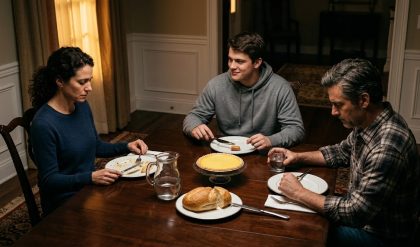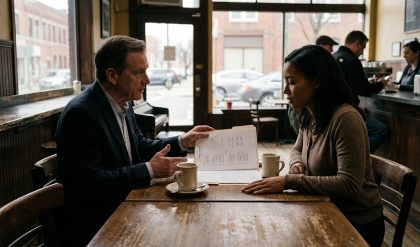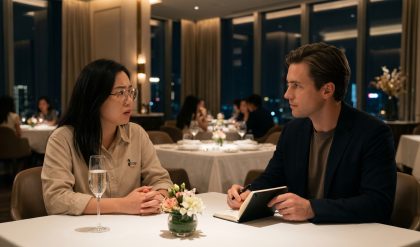
I called Asher before I could talk myself out of it. He answered on the first ring, and in the half second before he spoke, I could hear traffic behind him, the distant hum of campus life, and the tightness in his breathing. “Dad,” he said, and that one word carried fear, accusation, and relief in equal measure. “What the hell is going on? Mom called me and Madison saying you disappeared.”
“I didn’t disappear,” I said, though my voice came out rougher than I expected. “I left.”
“That sounds like the same thing.”
“It isn’t,” I told him, leaning back against the wall while the overhead bulb buzzed faintly above me. “Disappearing is what happens when someone takes you. Leaving is a choice. I made a choice.”
He was quiet long enough that I pictured him standing somewhere outside a lecture hall, one hand in his hair, trying to reconcile the father who had always paid bills on time and packed the car for family vacations with the man who had abandoned a kitchen full of keys. “Why?” he asked finally, and the word landed harder than Rachel’s anger ever could have. “Why like this?”
“Because staying was killing me,” I said, and once the truth was out, I could not soften it. “Not all at once, not in some dramatic way anyone could point to. Slowly, quietly, one day at a time. I woke up and realized that if I stayed another year, there might not be anything left of me for you or Madison to know.”
“Mom thinks you had a breakdown.”
“Of course she does,” I said. “A breakdown is easier to explain than admitting she stopped seeing me years ago.”
Asher breathed out sharply, not quite a laugh, not quite anger. “Are you coming back?”
“No,” I said, and the finality of it settled into the room like a door closing. “But I am still your father. That does not change. Your tuition is paid through graduation, and so is Madison’s. You are both taken care of.”
“We don’t care about the money, Dad.”
“I know,” I said, closing my eyes because I could hear the hurt under his words. “But I care. That’s what fathers do. They make sure their children can keep going, even when everything else falls apart.”
He asked where I was, and I told him only that I was somewhere I could breathe. It was not enough for him, and I knew that, but I also knew that telling him more would pull him into a secret he had not asked to carry. When Madison’s name came up, my throat tightened. I promised I would call her soon, and when Asher finally said, “I love you, Dad,” his voice had lost some of its sharpness, though not all of its hurt.
“I love you too,” I said, and after we hung up, I sat there listening to the silence. It had felt clean before, almost holy in its emptiness. Now it had weight. Freedom, I was learning, did not mean leaving every sorrow behind; sometimes it meant choosing which sorrows you could live with.
The next morning, I went downstairs before dawn. The shop was still dark, its concrete floor cold beneath my boots, and the air held the layered smells of old oil, dust, and metal shavings. Hank arrived twenty minutes later carrying two coffees in a cardboard tray, glanced at my face, and said nothing until he set one beside me. That was one of the first things I liked about him: he did not treat silence as an invitation to pry.
“Family?” he asked eventually.
“Kids,” I said.
He nodded as though that explained everything. “Those are the ones that follow you, even when nobody else does.”
I looked at him across the workbench, where the parts of a Triumph engine were arranged in neat rows. “You sound like you know.”
“Two daughters,” he said. “One talks to me every Sunday. One sends a Christmas card when she remembers. Both are still mine.” He picked up a rag and wiped his hands though they were already clean. “You can change states, names, jobs, clothes. You don’t get to stop being a father.”
For the next three months, I poured myself into work with a discipline that felt almost religious. I woke at five, made coffee on a hot plate, watched sunrise unroll over the desert, and descended the stairs before the first customer rattled the front door. A motorcycle was either broken or it was not, and that blunt honesty soothed something in me. Machines did not pretend affection while resenting the cost of attention. They did not smile for guests and cut you down on the drive home. They rewarded patience, precision, and respect.
Word spread that Hank’s shop had a new mechanic who listened before he touched a wrench. Customers came in expecting the usual language of parts and labor, and I gave them explanations clear enough that they did not feel foolish. A young nurse cried when I found a cheap fix instead of selling her an expensive one. A retired Marine brought in an old Harley that had belonged to his brother, and when we got it running after six years of silence, he stood in the parking lot with both hands on the handlebars, tears tracking through the dust on his face.
Hank noticed all of it. He watched me speak to people with the same care I used on their engines, and sometimes I caught him studying me as though he were trying to decide what kind of man hides inside another man’s life. One afternoon, while I was balancing invoices in the cramped office, he leaned against the doorframe and said, “You ever think about staying here for real?”
“I am staying here.”
“No,” he said. “I mean for real. Roots. Ownership. Something that doesn’t fold up into one duffel bag.”
I looked down at the ledger. The shop had gone from barely surviving to having a two-week waiting list, mostly because I had reorganized the finances, renegotiated supplier contracts, and stopped Hank from undercharging half the county out of misplaced guilt. “Why are you asking?”
He tossed a folder onto the desk. “Because I’m selling. My daughter in Montana has been after me to retire, and my knees have started agreeing with her. I want to offer it to you first.”
The number inside the folder was fair, maybe too fair. It was still more money than Kyle Anderson was supposed to have. Jonathan Hayes could have written the check without blinking, but Jonathan Hayes was a ghost with closed accounts and a wife who had hired people to find him. I ran my finger down the page and felt something I had not expected: fear, but not the old suffocating kind. This was the fear of a door opening.
“I don’t have this kind of money,” I said.
“We’ll work something out,” Hank replied. “A loan, payments, a slow buyout. I trust you.”
“You barely know me.”
He gave me a dry smile. “I know how a man treats strangers when nobody important is watching. That tells me plenty.”
That evening, while the desert cooled and the air outside my window smelled faintly of creosote, Madison called. I had been putting off calling her because daughters can hear things sons will politely ignore, and Madison had always been able to locate pain in a room the way doctors locate a pulse. When I answered, she did not shout. That was worse.
“Dad,” she said softly. “Mom hired a private investigator.”
“I figured she might.”
“So you know this is getting serious?”
“It was serious before I left,” I said. “People just notice now because I stopped standing where they expected me.”
There was a pause, and then her voice dropped lower. “I found messages between Mom and Brad. They go back two years.”
I closed my eyes. The room felt suddenly too warm, the walls too close. I had suspected, of course. I had seen Brad’s hand linger at Rachel’s back, had watched her mouth soften when his name appeared on her phone, had heard laughter behind the locked office door that never sounded like business. But suspicion exists in fog; confirmation has edges.
“I’m sorry you saw that,” I said.
“Did you know?”
“I suspected enough.”
“Is that why you left?”
“It was part of it,” I admitted. “But even without Brad, I was drowning. Your mother stopped seeing me long before she started seeing him.”
Madison’s breath trembled. “She says you humiliated her.”
“I probably did,” I said, because escape is rarely clean for the people left standing in the wreckage. “But she humiliated me quietly for years, and I kept calling it marriage because I didn’t know what else to call it.”
“She’s angry. She’s scared too, I think, but mostly angry.”
“She knows how to do angry,” I said. “Fear would require admitting she lost control.”
Madison was quiet, and I could hear the faint rustle of sheets or blankets, the small domestic sounds of a dorm room far away. “Are you happy?” she asked.
I looked at my hands. They were not the hands Rachel had known. They were rougher now, nicked and darkened with grease no matter how hard I scrubbed. “I’m learning how to be,” I said. “That has to count for something.”
“It counts,” she whispered. “I love you, Dad.”
“I love you too, Maddie. And listen to me. Never let anyone make you invisible just because loving them feels easier than leaving.”
The investigator found me on a Tuesday morning while I was replacing a clutch. He walked into the shop wearing khakis, sunglasses, and the kind of neutral expression former cops learn to use when they want people to underestimate how much they notice. Hank was in the back, the radio was playing low, and a fan near the open bay door pushed hot air around without cooling anything.
“Looking for Kyle Anderson,” the man said.
“That’s me,” I replied, wiping my hands on a rag.
He studied me a moment, then pulled a photograph from a folder and placed it on the counter. It was a wedding photo from twenty years earlier, Rachel and me under a white floral arch, both of us looking impossibly young and confident in the way only people can be before life begins charging interest. I remembered the heat of that day, the tightness of my collar, Rachel squeezing my hand as though we were leaping together into something grand. I remembered believing her.
“This you?” he asked.
I looked at the photograph long enough to honor the dead man in it, then pushed it back. “No.”
“You sure? You look a lot like Jonathan Hayes.”
“Don’t know him.”
The investigator smiled faintly, not unkindly. “My name is Thomas Reed. Your wife hired me to confirm whether Jonathan Hayes is alive.”
“Sounds like her problem.”
“It could become yours if she pushes hard enough.”
I met his eyes. “Am I wanted for a crime?”
“No.”
“Did I abandon minor children?”
“No.”
“Did I steal anything that can be proven as theft?”
His silence answered for him. Rachel might rage about money, but the accounts she knew were in order, the house was hers outright, both cars were sitting in the garage, and the children’s educations were secure. What I had taken belonged to a life she had never bothered to understand.
Thomas Reed slipped the photo back into the folder. “For what it’s worth, I don’t care why you left. I find people. I report what I can prove.”
“Then report that Kyle Anderson is alive and well.”
He leaned closer, lowering his voice. “Mrs. Hayes is not the kind of woman who accepts a closed door.”
“I lived with her for twenty years,” I said. “I know.”
He gave me his card. “When she shows up, call me if you need a witness. Not because I work for you, but because I prefer paperwork to violence.”
After he left, Hank emerged from the back with two spark plugs in his hand and a look of deliberate calm on his face. “That what I think it was?”
“Detective.”
“Your wife found you?”
“Close enough.”
“You running?”
I looked around the shop: the stained concrete, the pegboard walls, the half-built bike on the lift, the open desert beyond the bay door. For the first time, I understood that leaving and running were not always the same thing. “No,” I said. “I’m staying.”
Hank nodded once. “Good. Then she’ll find a mechanic with grease on his hands and bills to pay. Nothing more.”
Rachel called that night. I recognized the number, though I had deleted it from every contact list like removing a name could erase twenty years of muscle memory. The phone rang four times before I answered.
“Wrong number,” I said.
“Don’t you dare,” Rachel snapped, and the old sharpness in her voice came through so clearly that my body remembered before my mind did. My shoulders tightened; my jaw locked. “The detective found you. I know where you are.”
“Then you know I’m not coming back.”
“You cannot just walk away from twenty years.”
“I already did.”
“You left me keys like I was a hotel manager.”
“I left you the house, the cars, and a debt-free life,” I said. “The divorce papers are in the study. Sign them.”
“You sound insane.”
“No, Rachel. I sound calm. You’re confusing the two because you’ve never heard me calm when you were angry.”
Her breathing changed. For a moment, I imagined her in our old kitchen, the granite island gleaming under recessed lights, my keys gone now from the perfect line where I had placed them. “I want to see you face-to-face.”
Part of me wanted to refuse. Another part, quieter but stronger, wanted her to witness what existed beyond the husband she had reduced to a function. “Rose’s Diner,” I said. “Highway 10. Thursday at noon. Come alone.”
“I’ll be there.”
“I know,” I said, and hung up before she could take the last word out of habit.
Thursday arrived with a heat that made the asphalt shimmer. I reached Rose’s thirty minutes early and chose a booth in the back corner where I could see the entrance, the register, and the parking lot. Old habits from financial analysis die slowly; control the variables you can, document the ones you cannot, and never confuse confidence with certainty. The diner smelled of coffee, fried onions, and lemon cleaner, and the ceiling fans turned lazily above red vinyl seats worn smooth by decades of truckers, retirees, and families passing through.
Rachel entered exactly at noon. She had dressed for battle in a tailored navy suit, cream blouse, heels too expensive for the desert, and sunglasses she removed slowly as her eyes adjusted to the dim interior. Every inch of her announced success, and I knew that armor intimately because I had spent years standing beside it, polished and dismissed. Heads turned as she scanned the room, and when she saw me, something flickered across her face before she mastered it.
She slid into the booth without greeting me. Her gaze moved over my beard, the sun-browned skin at my neck, the calluses visible where my hands rested on the table. I had gained muscle from labor and lost the soft, careful edges of corporate life. She looked as though she had expected a ruined man and found, to her annoyance, someone more solid than before.
“You look different,” she said.
“I am different.”
“You look like a manual laborer.”
“I am a manual laborer. I fix motorcycles.”
Her mouth tightened. “You have a master’s degree in finance. You were a senior analyst.”
“And I was miserable.”
“You threw away your career to become a grease monkey.”
“No,” I said. “I threw away a life that was suffocating me. There’s a difference.”
The waitress arrived, and I ordered coffee and apple pie. Rachel ordered water with lemon, then hesitated and asked for a glass of white wine. At noon. That, more than anything she said, told me she was rattled.
“This is absurd,” she said once we were alone again. “You can’t simply abandon an entire life.”
“I didn’t abandon it. I divided it. You kept what mattered to you, and I took what mattered to me.”
“What mattered to you?” she repeated, her voice rising. “You emptied accounts I didn’t even know existed.”
“Accounts I built while you spent money on designer furniture, charity luncheons, and whatever Brad needed for his latest business emergency.”
Color rose in her face. “Brad is my business partner.”
“Brad is more than that, and we both know it.”
She went still.
“I found enough messages,” I said. “Not because I was spying, but because you became careless. There’s a difference between privacy and arrogance, Rachel.”
“You went through my phone?”
“I paid attention,” I said. “It must have felt unfamiliar coming from me.”
The waitress placed the wine in front of Rachel, the coffee in front of me, and the pie between us like a peace offering neither of us intended to accept. Rachel lifted the glass with a hand that trembled despite her attempt to hide it. “So that’s it? You found messages and decided to punish me?”
“No. The messages were proof of something I already knew. You left the marriage emotionally years ago. I just made my departure visible.”
Her eyes glistened, and for once I could not tell whether the tears were strategic or real. “We can fix this,” she said. “Counseling, therapy, whatever you need. We can start over.”
“You don’t want to start over,” I said gently. “You want the consequences to stop.”
“That is cruel.”
“It’s honest.”
“We have children.”
“They are adults, and their education is paid for. I did not abandon them.”
“You abandoned me.”
I let that sentence sit between us. Around us, forks clicked against plates, the door chimed, and someone at the counter laughed too loudly at something on television. The ordinary world continued, indifferent to the fact that two people were performing the final autopsy of a marriage over coffee and wine.
“Yes,” I said finally. “I left you. I left because staying required me to keep disappearing.”
Her face changed then, not dramatically, but enough. Some calculation loosened. Under the anger, I saw something that looked almost like confusion, as though she had never considered that the man across from her had been suffering in ways that did not inconvenience her enough to notice.
“I never meant to make you feel invisible,” she whispered.
“I know,” I said. “That’s the saddest part. You didn’t mean to. You just did it because seeing me required effort.”
She reached across the table and touched my hand. For twenty years, that touch had been able to soften me, redirect me, make me apologize for wounds I had not caused. This time, I did not pull away, but I did not close my fingers around hers either.
“Come home,” she said. “Please.”
I looked at her hand on mine and felt grief, not temptation. “Jonathan Hayes doesn’t live there anymore.”
“Then who are you?”
“Kyle Anderson,” I said. “And Kyle has a life he wants to live.”
She withdrew her hand as if burned. “This isn’t over.”
“It is,” I said. “You may not accept it today, but it is.”
She stood quickly, grabbed her purse, and looked down at me with the same expression she used when an employee disappointed her. “You’ll regret this.”
“Maybe,” I said. “But regret is not the same as wanting to go back.”
She left without paying for her wine. I covered the check, tipped the waitress too much, and stepped into the brutal sunlight feeling the strange lightness that comes after a storm passes and leaves the air ruined but breathable.
Two weeks later, I signed the papers to buy Hank’s shop. We structured it as a slow purchase, part loan, part owner financing, with Hank pretending he was being practical and me pretending not to see how generous the terms were. The day we completed the agreement, he handed me the keys with the solemnity of a man passing on something larger than a business.
“You’re going to do right by this place,” he said.
“I’ll try.”
“No,” he said. “You will. Trying is what people say when they want credit before the work.”
The morning after he left for Montana, I stood outside before opening and looked at the old sign. Hank’s Motorcycle Repair had been painted in faded black letters on weather-worn wood, and for a while I considered leaving it there out of gratitude. But gratitude should not become a disguise. By noon, the new sign was up: Anderson Cycle Shop.
Seeing the name in bold letters above the bay doors did something to me that no document, license, or forged signature had done. It made Kyle Anderson visible. Not real in a legal sense alone, but real in the daily, physical way a person becomes real by being needed somewhere. Customers arrived and asked for Kyle. Suppliers called and asked for Kyle. Travis Miller, a nineteen-year-old kid with quick hands and careful eyes, came in looking for part-time work, and within a month, I was teaching him how to rebuild carburetors the way Hank had taught me.
I paid Travis fairly, corrected him without humiliation, and learned that leadership felt less like power than stewardship when you had spent years being managed by contempt. He reminded me of myself at that age, before compromise calcified into personality. When he made mistakes, and he made plenty, I made him explain his thinking instead of calling him careless. People reveal their intelligence most clearly when you give them room to be wrong.
Business grew. Not explosively, not in some storybook overnight miracle, but steadily, the way worthwhile things often do. We expanded hours, bought better equipment, and cleared the storage room for custom fabrication. I did the books at night, my old finance skills returning without the corporate fluorescent dread attached to them. The irony did not escape me: the degree Rachel had mocked me for wasting became the reason a dusty motorcycle shop survived and then thrived.
One Saturday afternoon, Asher and Madison walked through the bay door together. I was beneath a Triumph Bonneville, tightening a bracket, when Madison’s voice cut through the noise of the fan and the clink of tools.
“Dad?”
I rolled out from under the bike so fast I nearly hit my shoulder on the lift. They stood side by side in the entrance, backlit by desert sun, looking older than they had in my memory. Madison had cut her hair short, the new style making her cheekbones sharper, and Asher had grown a beard that made him look alarmingly like me at twenty-five.
“Hey,” I said, wiping my hands on a rag. “This is a surprise.”
“We wanted to see where you’ve been living,” Asher said.
“Not hiding?” I asked.
He held my gaze. “I didn’t say hiding.”
I gave them the tour. I showed them the office, the lifts, the parts room, the custom bike we were building for a collector in Scottsdale, and the wall where I kept old license plates customers had given me. Travis introduced himself with grease on his forehead and immediately dropped a wrench, which made Madison smile for the first time since she walked in. I watched them take in the space, not as children judging a parent, but as adults trying to understand the shape of a decision that had wounded them.
“You seem happy,” Madison said after a while.
“I am,” I told her. “Happier than I’ve been in a long time.”
Asher picked up a wrench from the bench and turned it in his hand. “Mom’s not doing well.”
“I know.”
“She wants you back.”
“I’m not going back.”
He nodded slowly, and I realized he had not expected a different answer. Maybe he had needed to hear me say it without anger. Madison touched my arm, and the gesture nearly undid me because it held neither accusation nor pity.
“We’re not here to convince you,” she said. “We just wanted to understand.”
“And do you?”
She looked around the shop, at the motorcycles, the tools, the light coming through the open bay door. “I think so.”
We spent the afternoon together. They asked about Arizona, about the shop, about whether I was lonely. I told them I was alone, but not lonely, and they understood the distinction faster than Rachel ever would have. We ate burgers at a roadside diner that evening, sitting in a booth sticky with old varnish, and for the first time since they were young, conversation moved between us without anyone managing appearances.
Before they left the next morning, Asher hugged me hard enough to hurt. “I’m proud of you, Dad,” he said, sounding almost embarrassed by the confession. “That’s weird to say, but I am.”
Madison kissed my cheek. “Call more often. We miss you.”
“I miss you too,” I said, and watched them drive away with a peace I had not expected. I had not kept my family intact, but I had not lost my children. There was mercy in that, and I held onto it.
Fourteen months after I left California, Madison called again. I knew from the first syllable that something was wrong. Her voice had the carefully measured calm people use when they are standing beside catastrophe and trying not to startle it.
“Dad,” she said. “Mom is sick.”
I stood in the apartment above the shop, one hand on the windowsill, the desert outside blurred by afternoon heat. “How sick?”
“Stage three ovarian cancer. They found it three weeks ago.”
The old world returned in an instant. Not as longing, not as love, but as weight. Twenty years of breakfasts, arguments, mortgage payments, school plays, holiday photographs, and silent drives pressed into my chest until breathing became an effort.
“What’s the plan?” I asked.
“Surgery next week. Then chemo. Aggressive chemo.” Madison swallowed, and when she spoke again, she sounded younger. “The doctors say she has a chance if she responds, but it’s going to be rough.”
“How is she handling it?”
“She’s terrified,” Madison said. “Really terrified. And Brad disappeared after she told him.”
I closed my eyes. Of course he had. Men like Brad loved locked doors, wineglasses, and admiration in secret. They were less devoted to hospital rooms, insurance forms, and fear that stripped a woman of makeup, power suits, and control.
“She asked about you,” Madison continued. “Not to come back. She wanted to know if you cared whether she lived or died.”
Outside, the desert stretched gold and pitiless toward the horizon. I had built a life there with clean lines and honest labor, and California felt like a grave I had already crawled out of. Yet Rachel was in that grave now, not as the woman who had diminished me, but as the mother of my children, the person whose history was tangled with mine whether I liked it or not.
“Give me a day,” I said.
That night, I called Jake. He had been my friend since college, the only person from my old life who knew the whole architecture of my escape. He listened without interrupting while I explained Rachel’s diagnosis, Brad’s vanishing act, Madison’s call. When I finished, he exhaled slowly.
“You don’t owe her anything, John.”
“I know.”
“Do you?” he asked. “Because knowing and believing are different.”
I sat on the edge of the mattress. “What would you do?”
“I’d ask myself one question,” Jake said. “Twenty years from now, can you live with not going?”
I did not sleep. Dawn found me sitting by the window, watching the desert change from black to violet to molten gold. By then, I knew the answer.
I flew to California two days later. I did not tell Rachel I was coming because I did not want her to prepare a performance, and I did not want to give myself time to turn around. The hospital smelled of antiseptic, burnt coffee, and fear disguised as cleanliness. Fluorescent lights hummed overhead, and the polished floor reflected everyone’s shoes as though the building were swallowing them one step at a time.
Rachel was sitting up in bed when I reached her room. No makeup, no jewelry, hair pulled back loosely, hospital gown slipping at one shoulder, skin pale beneath the thin blanket. For twenty years, she had met the world armored in fabrics, posture, tone, and certainty. Now every layer was gone, and what remained was smaller, frightened, and unmistakably human.
“Jonathan,” she whispered when she saw me.
“It’s Kyle now,” I said gently. “But yes. It’s me.”
Tears filled her eyes before she could stop them. “I didn’t think you’d come.”
I pulled the visitor chair closer and sat beside her bed. The plastic cushion sighed under my weight. “I’m not here because everything is forgiven,” I said. “I’m here because twenty years counts for something, even when it ends badly.”
She covered her mouth with one hand, the gesture so unlike her that it hurt to see. “I’m scared.”
“I know.”
“What if the surgery doesn’t work?”
“Then you fight through the next thing.”
“What if there isn’t a next thing?”
I looked at her, and in that moment I did not see the woman from Rose’s Diner or the wife who had laughed at my expense or the partner who had chosen Brad’s attention over my presence. I saw the twenty-three-year-old woman under the white floral arch, squeezing my hand because she had been nervous too, though I had forgotten that part. “Then you face what comes honestly,” I said. “But you are not there yet.”
She cried quietly for a while. I sat with her through it, not touching her, not withdrawing either. There are kinds of compassion that do not require surrender. I was learning that mercy did not mean rebuilding the cage.
“I’m sorry,” she said when she finally found her voice. “For all of it. For Brad. For the way I talked to you. For making you feel like you were nothing in your own home.”
“I know.”
“No,” she said, gripping the blanket. “I don’t think you do. I understood it in pieces before, maybe. But being sick, being alone, having Brad vanish like I was some inconvenience he could reschedule, it forced me to see what I had done. I treated loyalty like weakness because yours was always there. I mistook your steadiness for lack of ambition. I made myself bigger by making you smaller.”
Hearing her say it brought no triumph. I had imagined, during the worst years, that confession would feel like justice. Instead, it felt like arriving at a locked house after the fire was already out.
“I appreciate you saying that,” I told her.
“Do you forgive me?”
I looked down at my hands, folded between my knees. There was no simple answer. Forgiveness, I had discovered, was not a switch you flipped because someone finally found the right words. It was more like muscle built through repeated use, painful and slow, and sometimes all you could honestly promise was that you had stopped wishing the other person harm.
“I’m working on it,” I said. “But Rachel, I can’t come back.”
“I know.” She wiped her face with the corner of the hospital sheet. “I wouldn’t ask that now. You look different. Not just the beard or the clothes. Your eyes are different. You’re free.”
“Yes,” I said. “I am.”
“Good,” she whispered, and somehow that single word was the closest thing to love she had offered me in years.
We talked for two hours. Not as husband and wife, not even as friends exactly, but as two survivors of the same long storm comparing the damage. We talked about Asher’s stubbornness, Madison’s tenderness, the house she had once loved because it impressed people and now found unbearable because every room accused her. She told me Brad had texted that she needed “space to heal,” which was such a cowardly sentence that even she laughed through her tears.
Before I left, she took my hand. Her fingers were cold. “Thank you for coming.”
“Get better,” I said. “Not for me. Not for the kids. For yourself.”
She nodded, and I walked out before memory could make me sentimental.
Two days after returning to Arizona, I called the hospital billing department. It took transfers, patience, and the kind of administrative persistence I had perfected long before I learned carburetors, but by the end of the week, Rachel’s treatment had been covered through an anonymous payment arrangement. Surgery, chemotherapy, hospital stays, medication, the brutal financial machinery of illness that can turn fear into bankruptcy. It cost eighty thousand dollars from accounts Rachel had never known existed.
I did not tell her. I did not tell the kids either. Generosity, if it is real, does not need an audience. I paid because I could, because I was no longer bleeding out my life in a house where I was unseen, and because some part of me still cared whether Rachel lived or died. Not enough to return. Enough to keep her from fighting cancer and debt at the same time.
Life resumed, though not in the same shape. Anderson Cycle Shop grew beyond anything I had imagined. We hired two more mechanics, then a fourth, expanded into the lot next door, and converted the back building into a custom fabrication space. Wealthy collectors from Scottsdale, Las Vegas, and even Los Angeles began ordering one-of-a-kind builds. The financial analyst Rachel had dismissed became a man who designed machines that sold for six figures, machines with hand-finished tanks, rebuilt vintage engines, and enough soul in them to make customers run their palms along the paint before speaking.
There was pride in it, but not the brittle kind I had once chased in performance reviews and bonus meetings. This pride lived in my body. It was in sore shoulders at the end of the day, in Travis teaching a new apprentice with the same patience I had given him, in the smell of welding sparks and fresh coffee before sunrise. It was in knowing that when I locked the shop at night, I was not escaping a life; I was preserving one.
Rachel survived surgery. She endured chemotherapy. Madison sent updates every few weeks, always careful not to ask too much of me and always unable to keep from telling me anyway. There were infections, bad scans, better scans, days when Rachel could not get out of bed, and days when she insisted on walking around the block with a scarf tied over her bare head like defiance. Eventually, remission came, cautious and conditional, but real enough to let everyone breathe.
She sold the big house in California. That news affected me more than I expected. I had thought of it as hers once I signed it over, but hearing it was gone loosened something final in me. The house had been the stage set for a marriage that looked better than it lived. Its sale felt like the dismantling of scenery after a play no one wanted to perform again.
Rachel moved into a modest condo near Sacramento and began volunteering at a cancer support group. According to Madison, she had become quieter. Not weak, not broken, but less desperate to dominate every room before anyone could challenge her. She learned to cook simple meals, gave away most of her designer clothes, and started calling both children without turning every conversation into a referendum on their loyalty.
The divorce finalized on a Tuesday morning. The email from my attorney arrived while I was rebuilding a Norton engine, and I read it leaning against the workbench with grease on my wrist. Marriage dissolved. Assets settled. No further action required. I expected grief, anger, maybe some dramatic internal collapse. What came instead was peace so plain and unadorned that I almost missed it.
That weekend, Asher and Madison visited again. Asher brought his girlfriend, Sophie, an engineering student with sharp questions and a laugh that made him look at her as though he had discovered weather. Madison came alone and stayed three days, sleeping on my couch under an old quilt I had bought at a thrift store. We rode motorcycles through the desert, ate at diners with cracked mugs and excellent pie, and talked about the future more than the past.
On their last evening, we sat outside the shop as sunset turned the sky copper and rose. The heat had softened, and the air smelled of dust cooling after a long day. Asher leaned back in his chair, Sophie’s hand resting on his knee, and studied me with the unsettling directness of adult children.
“You smile more,” he said.
“I have more reasons to.”
Madison took a sip of beer. “Mom is different too.”
“I’ve heard.”
“She’s still Mom,” she said with a faint smile. “But smaller in a good way. Like she finally realized she doesn’t have to be the biggest person in the room to matter.”
“I’m glad,” I said. “I mean that.”
Asher looked into his bottle for a moment. “She knows you paid her medical bills.”
I went still.
“She figured it out about three months ago,” he continued. “The hospital wouldn’t confirm it, but she knew. She asked us to tell you thank you.”
I watched a truck pass on the highway beyond the shop, its headlights briefly sweeping the gravel. I had not wanted gratitude. Gratitude creates a thread, and I had spent too long untangling myself. Still, I could not pretend the knowledge meant nothing.
“Tell her to stay healthy,” I said. “That’s enough.”
Madison reached over and squeezed my wrist. “She also said she understands why you didn’t tell her.”
“That might be the kindest thing she’s ever done for me.”
Three months later, a letter arrived at the shop. The envelope was thick cream paper, the address written in Rachel’s unmistakable handwriting, elegant and controlled even after everything. I carried it upstairs and set it on the small kitchen table, where it sat through dinner, through two cups of coffee, through an hour of me pretending to review supplier invoices. When I finally opened it, the paper smelled faintly of lavender, a scent I remembered from drawers in the old house.
“Kyle,” it began, and I had to stop there.
Not Jonathan.
Kyle.
She wrote that she knew about the medical bills, that the knowledge had nearly broken her because it forced her to understand a goodness she had dismissed when it was standing beside her every day. She wrote that remission had changed her relationship with time, that she had wasted too much of it performing success for people who vanished the moment life became inconvenient. She wrote that she was learning to be alone without bitterness and that she hoped Arizona had given me everything she could not.
At the bottom, in handwriting less steady than the rest, she had written, “Thank you for saving my life after I made yours so small.”
I read the letter twice. Then I folded it carefully and placed it in the top drawer of my nightstand, not because I intended to revisit it often, but because some things deserve to be kept without being worshiped. Outside, the desert evening deepened, and the first stars appeared over the roofline.
The phone rang. It was Jake.
“How’s business?” he asked.
“Better than ever.”
“Good. I’ve got a buddy in Montana selling a garage. Thought you might be interested in expanding.”
I smiled despite myself. “Send the details. I’ll take a look.”
After we hung up, I climbed onto the roof of the apartment with a bottle of water and watched the stars multiply. Somewhere in California, Rachel was living a quieter life. Somewhere in the past, Jonathan Hayes existed as a man in old photographs, wearing suits that no longer fit a body he no longer owned. Here, under an Arizona sky wide enough to forgive almost anything, Kyle Anderson was exactly where he belonged.
For a while, I thought that was the end of the story. A man becomes invisible, leaves before sunrise, builds a new life, forgives what he can, and learns that peace is not a reward handed down by others but a discipline practiced in private. It would have been a clean ending, and clean endings are tempting because they make suffering look organized in hindsight.
But life rarely respects the shape we give it.
The twist came on a Friday afternoon, almost three years after I left Rachel the keys. A courier arrived at the shop with a padded envelope addressed to Kyle Anderson, no return address, signature required. I assumed it was a title document for a custom build or some legal packet from the Montana garage deal, which had become our second location by then. I signed, carried it into the office, and cut it open with a pocketknife.
Inside was a flash drive and a folded note.
The note was from Thomas Reed, the private investigator Rachel had hired. His handwriting was blocky and plain.
“Kyle, I retired last month. Cleaning out old files, I found something you deserve to see. I should have given it to you years ago, but at the time, my client was Rachel. I am sorry. What you do with it is your choice.”
No signature beyond his initials.
I stared at the flash drive for a long time before plugging it into the shop computer. There was one folder. Inside were scanned bank records, email printouts, and photographs taken from a distance. At first, I thought they were about Rachel and Brad, proof of what I had already known and no longer needed confirmed. Then I opened the first document and felt the room tilt.
Brad had not merely been Rachel’s lover.
He had been stealing from her business for years.
Not small amounts. Not sloppy withdrawals a guilty man could explain as bookkeeping errors. Hundreds of thousands of dollars had moved through shell vendors, fake consulting invoices, and accounts tied to Brad’s relatives in Nevada. Rachel’s signature appeared on some approvals, but the metadata attached to the documents showed they had been processed from Brad’s office computer while Rachel was traveling. Thomas Reed had found it during the search for me, buried beneath the wreckage of our marriage, and had not disclosed it because Rachel had hired him only to locate her missing husband.
My first feeling should have been satisfaction. It was not. It was horror.
I kept reading. There were emails from Brad to another woman in Phoenix, messages full of the same warm manipulation I had watched him pour over Rachel. There were references to “the Hayes situation,” to Rachel being “too distracted to notice,” and to his plan to leave once he secured one final transfer. The date of that final transfer was the day after Rachel told him she had cancer.
He had not left because he was afraid of illness.
He had left because he had finished robbing her.
I sat in the office long after the shop closed, the computer screen glowing in the dark, the old fluorescent light buzzing overhead with the same dull insistence as the light in my former bedroom. Outside, Travis and the others locked up, called goodnight, and went home. I did not answer. My mind was back in Rose’s Diner, with Rachel’s shaking hand around a wineglass, and in the hospital room, where she had cried because she believed the man she chose over me had abandoned her for being sick.
He had done worse than abandon her. He had used her certainty against her, her hunger to be admired, her contempt for steady things, her blind confidence that she could not be fooled. He had taken her money while she took my presence for granted, and somehow all three of us had been living inside different lies.
I called Jake first.
He read the documents while I waited on the line. For once, he had nothing clever to say. “You have to tell her.”
“I know.”
“And the authorities.”
“I know.”
“You okay?”
I looked around the office at the framed first dollar Travis had insisted we hang, the old photo of Hank standing beside the original sign, the invoices stacked neatly beside the computer. “I don’t know.”
That was the truth. Freedom had taught me who I was when I belonged only to myself. This was something else. This was being handed the power to reopen a wound and possibly save the person who caused it.
I called Rachel the next morning.
She answered after three rings. Her voice was cautious but calm. “Kyle?”
Hearing her say my name still surprised me. “Rachel, I need to send you something. It’s about Brad.”
Silence.
Then, quietly, “What did he do?”
“Worse than either of us knew.”
I emailed the file while we stayed on the phone. I heard the small sounds of her opening it, the click of keys, the intake of breath as recognition began. She did not speak for nearly six minutes. When she finally did, her voice was not angry. That frightened me more.
“He stole from me,” she said.
“Yes.”
“For years.”
“Yes.”
“And you found this?”
“Thomas Reed found it. He sent it to me yesterday.”
Another silence. Then she laughed once, a dry and broken sound. “I destroyed my marriage for a man who was robbing me.”
I closed my eyes. “Rachel.”
“No,” she said. “Don’t soften it. I need to hear it the way it is.”
“You made choices,” I said. “He committed crimes. Those are related, but they’re not the same.”
“He made me feel brilliant,” she whispered. “Do you know how pathetic that sounds? You made me safe, and I resented you for it. He made me feel brilliant while emptying my accounts.”
I had no answer that would not injure her further.
“I’ll call my attorney,” she said.
“I’ll send everything to you and to whoever you want.”
“Why?” she asked. “Why help me again?”
The question should have been easy by then, but it was not. I looked through the office window at Travis opening the bay doors, morning light spilling across the concrete. “Because I’m not the man you made me feel like,” I said. “And I’m not the man Brad counted on me being either.”
Brad was arrested two months later in Nevada after attempting to sell a boat registered through one of the shell companies. The case became ugly and public, the kind of local business scandal people pretended not to enjoy reading about. Rachel cooperated with investigators, surrendered documents, testified before a grand jury, and endured headlines that reduced the worst years of her life to tidy phrases. Former Partner Accused of Fraud. Businesswoman Misled in Six-Figure Scheme. Financial Records Reveal Long-Term Theft.
She recovered some of the money, not all. Enough to keep her condo. Enough to rebuild modestly. Not enough to restore the empire she had spent years polishing for people who never truly cared. Strangely, that seemed to suit her. When Madison visited her months later, she called me afterward and said, “Mom looks tired, but real.”
I understood what she meant.
The last time I saw Rachel in person was not in a diner or hospital but in an airport terminal in Phoenix. She was connecting through on her way to visit Madison, and I was flying back from Montana after inspecting the second garage. We spotted each other near a coffee stand, both of us older, both of us carrying lives that no longer overlapped except through our children and the strange mercy of history.
She looked healthy. Thinner, silver threaded through her hair, no power suit, no armor. She wore jeans, a soft gray sweater, and sneakers. For the first time since I had known her, she looked like she had dressed for comfort instead of conquest.
“Kyle,” she said.
“Rachel.”
We stood awkwardly for a moment while travelers moved around us, dragging suitcases, checking phones, chasing gates and futures. Then she smiled, small but genuine.
“Brad took a plea,” she said.
“I heard.”
“Seven years.”
“Good.”
She nodded. “I wanted to tell you something in person. I spent a long time thinking I ruined your life.”
“You made parts of it very hard,” I said. “But you didn’t ruin it.”
“I know that now. You saved it by leaving.”
That sentence moved through me slowly. I had expected apologies, gratitude, maybe shame. I had not expected her to understand the leaving as an act of rescue, not only for me but perhaps for everyone who had been trapped in the performance of our marriage.
“I think you saved yours too,” I said.
Her eyes filled, but she did not cry. “I’m trying.”
“I can see that.”
Her boarding group was called. She adjusted the strap of her bag and looked at me with a softness that would have broken my heart years earlier and healed nothing. “I hope you keep being happy.”
“I intend to.”
“And Kyle?”
“Yes?”
“Thank you for not becoming cruel.”
I watched her walk toward the gate, and this time, neither of us turned around.
That evening, back in Tucson, I climbed to the roof above the shop. The desert was quiet except for the distant rush of traffic and the soft ticking of metal cooling below me. Stars appeared one by one, indifferent and generous. I thought about the morning I left, the keys lined up like evidence, the ring under the sugar bowl, Rachel waking to a life rearranged by my absence. I had believed then that I was vanishing.
I was wrong.
I had been appearing.
Not all at once, and not without cost. I had lost a marriage, a house, a name, and the comforting lie that endurance is always noble. Rachel had lost her certainty, her lover, much of her money, and the version of herself that needed admiration more than truth. Brad had lost the freedom he stole from others. Our children had lost the illusion that their parents were simple people with simple failures.
But something remained.
Asher and Madison called every Sunday now, sometimes together, sometimes separately. Travis ran the Tucson shop twice a month while I traveled to Montana. Hank sent postcards from whatever lake his daughter had convinced him to fish. Rachel sent a card each Christmas addressed to Kyle, never Jonathan, with two or three careful sentences and no attempt to pull me backward.
I kept each card in the drawer with her first letter. Not because I loved her the way I once had, or because I regretted leaving, but because the record mattered. We had been terrible to each other in ways both obvious and hidden. We had also, at the end, chosen not to finish the story by becoming monsters.
The last thing I saw before going downstairs that night was my reflection in the darkened window over the stairwell. Grease at my wrist. Gray in my beard. Sun in the lines around my eyes. A man who had been Jonathan Hayes once and Kyle Anderson now, but beneath both names, finally someone whole enough to stand alone.
For twenty years, I had mistaken being needed for being loved, silence for patience, and endurance for honor. I know better now. Love should not make you disappear. Loyalty should not require burial. And sometimes the most honest thing a man can do is leave the keys behind before sunrise, step into a life no one gave him permission to claim, and keep walking until he recognizes himself in the light.